Items on this page are from past several months. Some links may no longer be active.
Click on underlined extracts to read full articles.
Haz clic sobre extractos subrayados para leer articulos
completos.
Despite signs that the financial system has stabilized, banks remain threatened by billions of dollars of bad loans on their balance sheets, and more could fail if the economy worsens, a congressional watchdog reports.
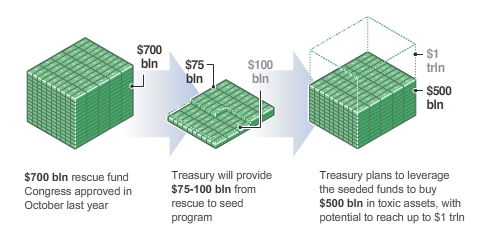
In its latest assessment of the $700 billion financial system bailout,
the Congressional Oversight Panel warns that banks still hold many risky loans of uncertain value. If
unemployment rises sharply or the commercial real estate market collapses - as many economists fear - the banking system could again lose its footing, the panel says
in a report to be released Tuesday.
"The financial system (remains) vulnerable to the crisis conditions that (the
bailout) was meant to fix," the panel wrote in a draft copy of Tuesday's report.
The Congressional
Oversight Panel was created as part of the Troubled Asset Relief Program, or TARP. It is designed to provide an additional
layer of oversight, beyond the Special Inspector General for the TARP and regular audits by the Government Accountability
Office.
The report says many of the Obama administration's financial stability
efforts are working - including infusions of new capital for banks, heightened scrutiny of capital ratios, "stress-testing"
of large financial firms. It also pointed to a public-private investment plan designed to buy up bad assets
that has yet to get off the ground.
Bubanks still holding the assets at the heart of the crisis, they
remain vulnerable, the panel says.
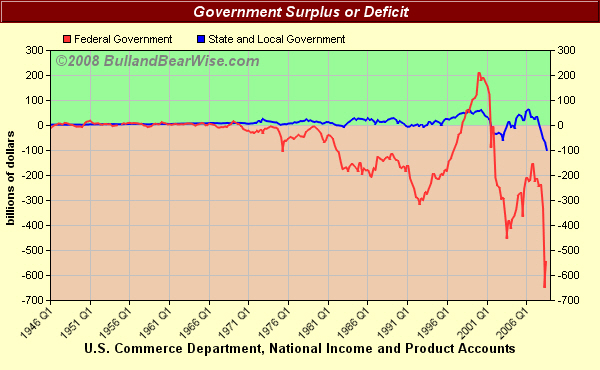
DEFICIT SOARS
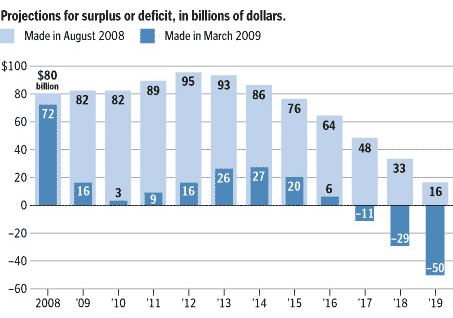
The federal budget has gone from surplus to deficit during the past decade.
but uncertainty exists over the speed and duration of the economic recovery, according
to the most recent survey of private economists.
The Blue Chip Economic Indicators survey of private economists released on Monday showed
about 90 percent of the respondents surveyed believe the economic downturn will be declared to have ended this quarter.
This upbeat assessment followed recent government data showing gross domestic product
(GDP) contracted at a shallow 1.0 percent rate in the second quarter after sinking 6.4 percent in the January-March quarter.
Recent data, including housing
and key labor
market indicators, have suggested
a
bottoming in the recession and
the economy
close
to turning the corner
AGGRESSIVE
stimulus spending
by governments helped
the
world avoid a second Great
Depression, but full economic
recovery will take two years
or
more,
Nobel
Prize-winning economist Paul Krugman said...
He added that the worst of the global crisis was over, with economic
and exports growth showing signs of stabilisation.
Still, recovery is likely to be 'disappointing' as government spending
is not sustainable in the long run and the unemployment rate is still lagging behind, he told a two-day World Capital Markets
Symposium on Monday in Kuala Lumpur.
There is not likely to be any 'Phoenix-like' recovery, such as in
the 1997-98 Asian financial crisis when economies expanded dramatically, led by a sharp rebound in exports, he said.
'We have managed to avoid a second Great Depression...but full recovery
is at least two years and probably more,' Mr Krugman said. Asia is likely to see a faster rebound than the United States and
Europe, partly driven by recovery in manufacturing exports, he added.
La disipación de la crisis financiera depende
de las políticas internas, dice Enrique Iglesias
El secretario general Iberoamericano,
Enrique Iglesias, opinó hoy que la disipación de la crisis financiera global dependerá de las políticas internas de las naciones
y exhortó a fortalecer los programas de ayuda social.
For the first time, more than 34 million Americans received
food stamps,
which help poor people buy groceries, government figures said on Thursday, a
sign of the longest and one of the deepest recessions since the Great
Depression
Enrollment surged by 2 percent to reach a record 34.4 million people, or one
in nine Americans, in May, the latest month for which figures are available.
It was the sixth month in a row that enrollment set a record. Every state
recorded a gain in participation from April. Florida had the largest increase at
4.2 percent.
Food stamp enrollment is highest during times of economic stress. The U.S.
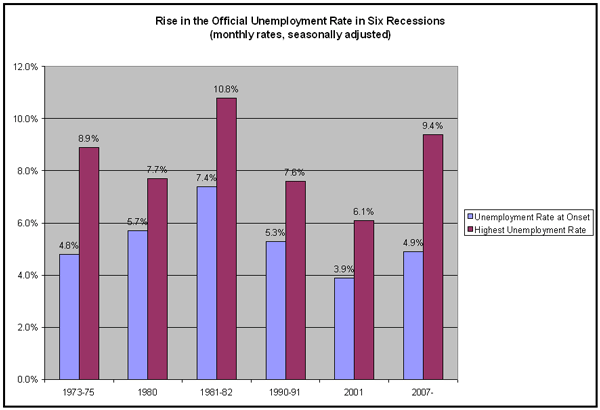
unemployment rate of 9.5 percent is the highest in 26 years.
Average benefit was $133.65 in May per person. The economic stimulus package
enacted earlier this year included a temporary increase in food stamp benefits
of $80 a month for a family of four...CLICK ON STAMPS TO READ MORE
Government Mortgage Program Gets Report Card
The government’s
refinancing and loan modification program is on track to offer assistance to up to three to four million
homeowners over the next three years, according to a Treasury Department report released Tuesday.
The report offered the first glimpse of how the Making Home Affordable Program has made headway in helping troubled
homeowners over the last few months.
More than 235,000 loan modifications and claims are now underway. The Obama
administration has said the program aims to help 500,000 borrowers by Nov.
1.
Examemagazine (one Brazil´s main business publications)
has published a cover story about the recent facts showing that thecrisis in Brazilwas short, and seems to be over.
The
key word here is “facts”. We are not talking about predictions from the same analysts who failed to see
the turmoil faced by the world after mid-2008. Various key indicators confirm that economic activity and job creation
have already undertaken a recovery process. While most of the world´s economies struggle to get out of the hole, Brazilian
economy is again growing.
Some
cases have become symbolic. Let´s take General Motors. While in the United States the car manufacturer is facing
all kinds of problems, and selling part of their Europe assets, in Brazil a R$ 2 billion investment plan is in place to expand
production. The Brazilian auto industry expects to sell 3 million units in 2009, a historic record in a years in which
everyone expected the worst.
A
recessionary scenario seemed realistic for 6 months, with reduction of the GDP, absence of credit, lack of confidence, production
interruption and slowing of sales. This reality is now only seen in the rearview mirror. Brazil is, in fact, experiencing
the next phase: recovery.
Employment
is also entering a considerable recovery process, after predictions pictured a dark. 300,000 new jobs were created on
the first 6 months of 2009, in the economy as a whole. In the end of last year 800,000 jobs were lost in the country, but
in 2009 a positive balance of 600,000 is expected (an exception amongst the world´s 20 largest economies).
It
is interesting to note that a country that has always been hardly hit by the world´s economic turmoils, this time is keeping
its head out of the water based mostly on internal demand. Consumers have not lost their appetite, even with reduction
of credit.
During
the last few weeks, Exame conducted a research with 360 companies in Brazil, which gives us a vision on the current business
and economic climate. Following are some noteworthy facts:
most companies expect considerable growth in Brazil´s GDP in 2009 (54% expect
1% to 3% growth)
48% say the effects of the crisis has diminished in their industry
only 17% do not expect growth in their companies
76% believe growth will be supported mostly or solely by the domestic market
70% are maintaining investments planned before the crisis overall sales are
higher than 1 year ago
cement sales grew 17% since February
vehicles, computers and household appliances are showing strong indications
of growth
consumer credit and real estate also show moderate recovery rates
general industrial production and credit for companies are showing a slower
recovery rate.
96% expect to keep current staffing or hire more people
Cinco consecuencias filosóficas de la crisis
La actual
crisis económica no se limita a una cuestión de estadísticas, ni se reduce al devastador impacto social del desempleo y la
incertidumbre
US State and Local Government Financal
Crisis Now Critical
A recent report by the National Conference of State
Legislatures tallied a total state shortfall of $113.2 billion in FY09 and a gap of $142.6 billion in FY10.Sixteen states, including Georgia,
have unemployment rates over 10%.Georgia
is one of 18 states facing a budget gap of 20% or more of its current budget.
These changes
cannot help but affect education.Utah
has enacted a shorter school year and legislators reduced funding for education by 13% (although part of this cut has been
“backfilled” with stimulus).North
Carolina cut state employee salaries, including teachers, by .5% giving them 10 hours of furlough
“leave.”Also, according to their Legislative Budget Office, teachers
will not receive step increases in FY10.California
has laid off 27,000 teachers.Nevada
cut K-12 teachers salaries by 4%.New
Mexico has cut all state employee pay, including teachers, by 1.5%, but will put the funds back as
an increased contribution to employee pensions.
CALIFORNIA SOLUTION:
LEGALZE AND TAX MARIJUANA
According to one poll, 56 percent of California voters say marijuana should be legalized
and taxed.
As many see it, marijuana is already virtually legal in California where state law allows it for
medical use....Bernard Melekian of the California Police Chiefs Association says "98 percent of the people who are acquiring
marijuana at these dispensaries do not appear to have the conditions for which the law was intended to apply."
Users in Oakland now pay a special city tax on medical marijuana - a first in the state, but maybe
not the last. Marijuana tax promoters say a lot of potential revenue is just going up in smoke.
There is talk in California of what you could call a radical idea for the cash-poor state to raise
money. It's controversial, but proponents say the plan could smoke out more than a billion dollars for the state...
It's
estimated that $14 billion worth of marijuana is sold illegally in the state. Making it legal and taxing it at $50 dollars
an ounce would bring in approximately $1.4 billion a year.
Alabama's debt-ridden Jefferson County laid off about two-thirds
of its 3,600 employees on Monday because of plummeting revenues, a move that will sharply curtail services in areas ranging
from roads to courthouses.
The cuts are just the latest blow to Jefferson, whose population
of 660,000 includesBirmingham,
the state's largest city and its economic powerhouse. They come after the county racked up around $4 billion in debt by using
exotic financial instruments to fund a revamp of its sewer system.
The work-force cuts will hit the roads and transportation, revenue
and security departments, and reductions will also affect the courthouse andinformation technology departmentas
well as laborers paid on an hourly basis, according to a senior county official...
Circuit Judge Joseph L. Boohaker ruled that leaders inJefferson County— now trying to head off a municipalbankruptcy filingof historic
proportions — could go ahead with plans to slash $4.1 million from the budget of Sheriff Mike Hale, who had filed a
lawsuit that temporarily blocked spending cuts for his office.
About 1,000 county workers already are on unpaid leave
because courts threw out a key county tax, and Hale has warned that reductions to his budget would mean fewer patrols by deputies
and decreased courthouse security.
A spokesman for Hale, Randy Christian, said the sheriff
toldGov.
Bob Rileyafter the ruling that state assistance may be needed to performbasic law enforcementtasks once the department's current funding is exhausted in early September.
"We will certainly be looking at calling in the National
Guard," said Christian.
Since
we received fresh data on Friday, it seems like an auspicious time to present a new version of my chart making this point:
The
green bar is the current recession. Most forecasters expect the economy to grow, albeit tepidly, in coming quarters. If they
are right, the estimated peak-to-trough GDP decline in this downturn is 3.9%. ...The chart has three main messages:
The current downturn is the worst since World War II (the green bar is larger than each of the four blue bars).
The current downturn is a far cry from the Great Depression (the green bar is much smaller than the red bar). You would
have to assume enormous further GDP declines to get anywhere near the stunning 26.7% peak-to-trough decline in GDP during
the Depression.
The economy contracted sharply (12.7%, the orange bar) after World War II. That’s why, from a GDP perspective, the
current downturn is the worst since World War II (defined for these purposes as stretching to 1947), not the worst since the
Great Depression.
SEE FULL ARTICLE ON DONALD MARRON'S WEBSITE BY CLICKING ON GLASSES
Warning: Oil supplies are running out fast
Catastrophic shortfalls threaten economic recovery, says world's top energy economist
The world is heading for a catastrophic energy
crunch that could cripple a global economic recovery because most of the major oil fields in the world have passed their peak
production, a leading energy economist has warned.
Higher oil prices brought on by a rapid increase in demand
and a stagnation, or even decline, in supply could blow any recovery off course, said Dr Fatih Birol, the chief economist
at the respected International Energy Agency (IEA) in Paris, which is charged with the task of assessing future energy supplies
by OECD countries.
In an interview with The Independent, Dr Birol said
that the public and many governments appeared to be oblivious to the fact that the oil on which modern civilisation depends
is running out far faster than previously predicted and that global production is likely to peak in about 10 years –
at least a decade earlier than most governments had estimated.
SEE FULL ARTICLE - CLICK ON GLASSES
NATIONAL INFLATION ASSOCIATION
Washington is Clueless About Inflation
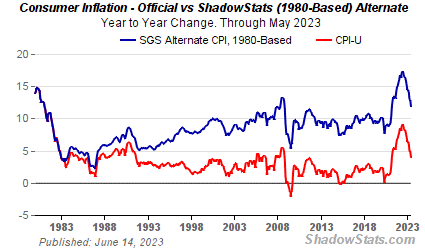
It's
unfortunate that nobody in Washington understands what the true definition of inflation is. Inflation is the expansion of
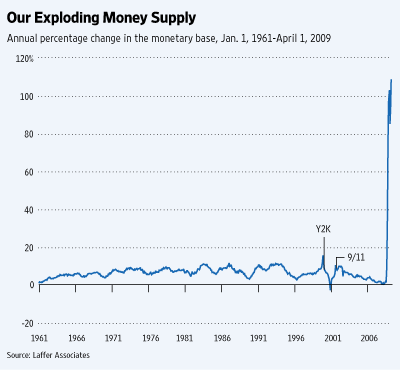
money supply from the printing of money, low reserve requirements, and the Federal Reserve's open market operations. The hyperinflation
in Germany in the 1920's as well as in Zimbabwe today was caused by the government running their printing presses non-stop,
exactly like the U.S. is doing right now.
It just so happens that our massive printing of U.S. dollars has come at
the same time as the biggest bursting of any bubble in world history. Therefore, nobody will see inflation in the form of
rising prices until excess inventories are done being worked off. Eventually there will be too many dollars chasing too few
goods. Remember, none of the stimulus dollars are being spent for the increased production of goods. Manufacturing jobs are
way down and the only area of rising employment is non-productive government jobs.
The U.S. government wants inflation
because inflation benefits debtors and harms creditors, with the U.S. being the largest debtor nation in the world. If the
U.S. wants price inflation and the Federal Reserve takes every step in their power to create it, like they are doing today,
eventually price inflation will arrive but won't be possible to control.
TO READ MORE ON NIA
WEBSITE:
SEE MORE VIDEOS FROM THE NATIONAL INFLATION ASSOCIATION:
The US is on the brink of emerging from its 18-month-long recession according to the International Monetary
Fund, as official figures showed the American economy contracted by just 1pc in the second quarter of the year.
• Focus: Economic and financial
stabilization; developing exit strategies to eventually unwind extraordinary policy support; and dealing with the long-term
legacies of the crisis (weak financial supervision and regulation, massive fiscal imbalances, and damaged household balance
sheets).
• Assessment: Considerable progress has been made toward stabilizing the financial system,
though significant strains remain. The sharp contraction in economic activity is ending, aided by substantial macroeconomic
stimulus. However, the recovery is likely to be gradual, and downside risks prevail.
• Policy advice:
o Stabilization: the priority
is fully healing the financial system. Vigilance is warranted in light of remaining downside risks. Macroeconomic policies
can respond further if risks materialize. o Exiting extraordinary support: key elements include developing strategies
to withdraw public support from the financial system, and to shrink the Fed’s balance sheet, to position it to
pull back on monetary stimulus when a sustainable recovery is underway. Smooth communication will be key to set market
expectations. o Long-term legacies: broad and thorough reforms to financial regulation are needed to deal with
the shortcomings exposed by the crisis. Substantial fiscal adjustment will be needed to stabilize public debt, along
with measures to contain health care costs. Household balancesheet adjustment will likely weigh on growth over the medium
term while narrowing the external imbalance, with global implications.
Last week, President Obama stated his willingness to consider a commission to address our federal fiscal crisis. In an
interview with The Washington Post's Fred Hiatt, the President noted such a commission may be the most realistic
way to begin putting our nation's financial house in order, adding that "everything is going to have to be on the table" for
true fiscal reform.
"I was pleased to read Fred Hiatt's interview of President Obama published in the July 22nd edition of the Washington Post.
During the interview, the President stated his willingness to consider a fiscal commission where 'everything is going to have
to be on the table,' noting it may be the most realistic way to begin putting our nation's financial house in order.
"As I have stated for several years, tough choices must be made in connection with federal budget controls, entitlement
reforms, spending constraints and revenue increases. A properly structured and nonpartisan commission would engage the American
people about the true financial condition of our country and the need for a range of comprehensive reforms. This commission
can lay the groundwork for the ‘grand bargain’ President Obama has said he wants to achieve during his presidency.
"I applaud the President’s recognition that a fiscal commission may be the most productive way to address the serious
financial challenges threatening America's future. Such a commission should include appropriate members of Congress and the
Administration as well as several capable and credible non-governmental experts. After engaging the public and key stakeholders
in new and unprecedented ways, it should make a range of recommendations that would be guaranteed a vote by the Congress.
Ultimately, this extraordinary process can help us avert a much bigger potential economic crisis and ensure that our collective
future is better than our past."
Dave Walker President & CEO Peter G. Peterson Foundation
*Wells Fargo’s 2008 losses include losses from
Wachovia
The Recession
is Over
Now what we need
is a
new kind of
recovery.
The Great
Recession, which rolled over our financial lives like one of P.J. Keating's giant pavers, is most likely over. Home sales,
while still far below the levels of a year ago, have risen for three straight months—a first since 2004. The stock market
has rallied 44 percent since March, thanks to renewed optimism and improving earnings from big companies like Goldman Sachs
and Apple. In June, seven of the 10 indicators in the Conference Board Leading Economic Index pointed upward, including manufacturing
hours worked and unemployment claims. Macroeconomic Advisers, the St. Louis–based consulting firm, says the economy
is expanding at a 2.5 percent annual rate in the current quarter. Economic activity "will increase slightly over the remainder
of 2009," Federal Reserve chairman Ben Bernanke told Congress.
"...we are concerned about the security of the Chinese assets..."
U.S. briefers said the president's team told the Chinese that the United
States was committed to making sure the economic and monetary stimulus being used to fight the recession did not fuel inflation.
U.S. officials told reporters that the U.S. side stressed to the Chinese
that the United States has a plan to bring the deficit down once the economic crisis has been resolved. They said Bernanke
discussed the Fed's exit strategy from the central bank's current period of extraordinary monetary easing, emphasizing that
the Fed was being careful to guard against future inflation.
The Chinese, who have the largest foreign holdings of U.S. Treasury
debt at $801.5 billion, have been expressing worries that soaring deficits could spark inflation or a sudden drop in the value
of the dollar, thus jeopardizing their investments. Chinese officials said those concerns were raised during Monday's talks.
"We sincerely hope the U.S. fiscal deficit will be reduced, year after
year," Assistant Finance Minister Zhu Guangyao told reporters after the Monday talks had ended.
"The Chinese government is a responsible government and first and foremost
our responsibility is the Chinese people, so of course we are concerned about the security of the Chinese assets," Zhu said,
speaking through an interpreter.
The discussions on America's deficits and China's role in financing
them highlighted the growing economic importance of China, now the world's third largest economy...
Bernanke expressed particular opposition
to a proposal in Congress for the Government Accounting Office to be able to "audit" the Fed's interest rate decisions. "I
don't think that's consistent with independence. I don't think the American people want Congress running monetary policy.
That's exactly what (the bill) would do," he said.
"...once the recovery began – in different calendar years in different countries – the
average rate of growth was strong. GDP growth in the first year after the Great Depression averaged 4.7 per cent, followed
by 4.6 per cent in the second and third years...
The world economy is in its worst recession since the early ’80s.
During the second half of 2008 world credit markets froze and international
trade suffered a sudden 20% decline. The slump in world trade resulted in a sharp fall in exports in the major and emerging
markets, confirming that the world economy is more interlinked than ever through trade and capital flows.
In recent months credit markets have started to thaw. As credit flows normalised,
so bank and corporate bond spreads narrowed sharply from historic highs. Many economic indicators are starting to show signs
of recovery.
Government and central bank policies restored some investor confidence in
financial markets and equity prices recovered ground as fears of a ’30s-style depression receded.
Although government and central bank policies appear to be gaining traction,
we believe there are longer-term costs to these policies. Extremely low interest rates are not sustainable over the long term
and as economic activity revives, interest rates need to rise.
IFAC has launched a resource center
to help professional accountants address issues related to the global financial crisis. The center (http://www.ifac.org/financial-crisis/) serves as an international clearinghouse of programs,
articles, speeches, and other initiatives undertaken by IFAC, its independent standard-setting boards, members and associates,
as well as other organizations that are relevant to professional accountants.
To assist professional accountants in addressing
issues related to the global financial crisis, IFAC and the International Auditing and Assurance Standards Board (IAASB) have
focused on three activities:
+ To increase awareness among preparers and
auditors of existing and newly developed guidance that can assist them in reporting on financial instruments;
+ To encourage further convergence in reporting
standards on financial instruments, while at the same time strongly supporting (the continuation of) fair value accounting
since reducing transparency is not in the interests of investors; and
+ To participate in and promote discussions
of best practice with respect to the audits of financial institutions and other organizations that are affected by the current
crisis.
View President Obama's July 22 Health Reform Press Conference (approx. 1 hour)
The economic indicators we follow to track real economic activity
are all signaling a slowdown of massive proportions. You wouldn’t know it reading the mainstream papers of course
– they all focus on the relative decline in the slowdown’s intensity. Reading about the slowdown ‘slowing
down’ is not the same as growth however, and does not warrant excitement in our opinion.
We
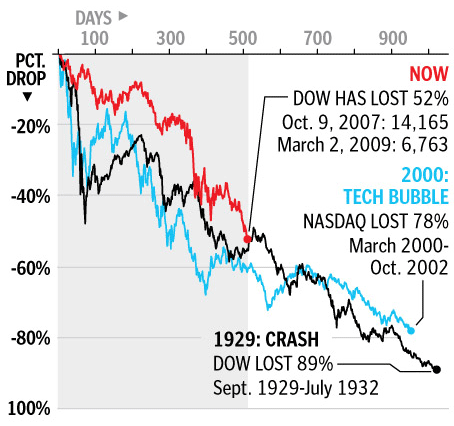
find the similarity between the 2008 economic collapse and the 1929 economic collapse disturbing. Don’t get sucked
in… the real economy is still struggling and the market has yet to reflect this. In 1932, the
Dow
Jones Industrial Average bottomed 90% below the September 1929 peak. The S&P 500 Index peaked in October 2007 at
1,576, and from our brief analysis above we can easily calculate a drop in the S&P 500 of as much as 88% from that
peak using our ‘double trouble’ scenario. At the very least, under all of our scenarios it appears that the
S&P 500 Index will test the March 2009 low of 666. Judging by the continued declines we are seeing in the real economy,
we expect that test to happen sooner rather than later.
In our view, the only thing propping
this market up is investor sentiment. Earnings have not improved.
US
industry used only 68.3% of available capacity in May 2009, according to a monthly report from the Federal Reserve.1
That represents almost one third of all US industrial capacity sitting idle. Prior to the current recession, the lowest
rate recorded since the Fed started this series of records in 1967 was 70.9% in December 1982.
The
US government has spent $2.67 trillion thus far in fiscal 2009, but has only collected $1.59 trillion.
The
US government collected $685.5 billion in individual income taxes so far this year, a 22% drop from the $877.8 billion
the government took in during the first nine months of 2008.
US corporate income taxes plunged 57%
to $101.9 billion in 2009, down from $236.5 billion in the first nine months of fiscal year 2008.
4
million Americans have been looking for work for more than 26 weeks, representing
29% of the unemployed
– the most since records began in 1948.
During the last 30 years, Americans who lost their jobs
took an average 15.8 weeks to find new positions. In June 2009, the average duration of unemployment was 24.5 weeks,
the longest since records began in 1948.
The number of people collecting unemployment benefits
reached a record 6.88 million in the week ended June 27, 2009.
Approximately six people are seeking
work for every job opening, the most since the government began keeping such records in 2000. A year ago, the ratio was
a little more than two-to-one...Sprott
Asset Management
Are
We in the Early Stages of a Economic Depression? A Comment on the above analysis
I do not disagree...The risks in our economy remain exceptionally
high. The stock market is in the process of defining winners and losers but overall is being supported by massive liquidity
injected into the overall economy by Uncle Sam (Fed and Treasury).
What
may cause the next leg down in the economy? Commercial real estate defaults which will impact a large number of banks (community,
regional, and money center) and insurance companies.
Recession?
Depression? Let’s just say by either definition, we have a long way to go.
For a glimpse of what awaits
Britain, Europe, and America as budget deficits spiral to war-time levels, look at what is happening to the Irish welfare
state.
Events have already forced Premier Brian Cowen to carry out the harshest assault yet
seen on the public services of a modern Western state. He has passed two emergency budgets to stop the deficit soaring to
15pc of GDP. They have not been enough...
The Fed's doctrine – New Keynesian Synthesis – has
let it down time and again in this long saga, and there is scant evidence that Fed officials recognise the fact. As for the
European Central Bank, it has let private loan growth contract this summer.
The imperative for the debt-bloated West is to cut spending systematically
for year after year, off-setting the deflationary effect with monetary stimulus. This is the only mix that can save us.
Bernanke
afirmó que el plan anticrisis no provocará inflación en EE.UU.
El presidente de la Fed aseguró que la entidad posee "numerosas herramientas eficaces para ajustar la
política monetaria" cuando la economía retome la senda del crecimiento; advirtió que se mantendrá el desempleo
(NOTE: By comparison the estimated population
offishin
the oceans is 3,500,000,000,000
or 3.5 trillion...
the estimated number of humans on Earth is
6,760,000,000 or 6.76 billion...
and the estimated number of ants is
200,000,000,000,000 or 200 trillion
thus $23.7 Trillion
=
$3,506 per human being
or $ 6.77 per
fish
or 12 ¢ per ant)
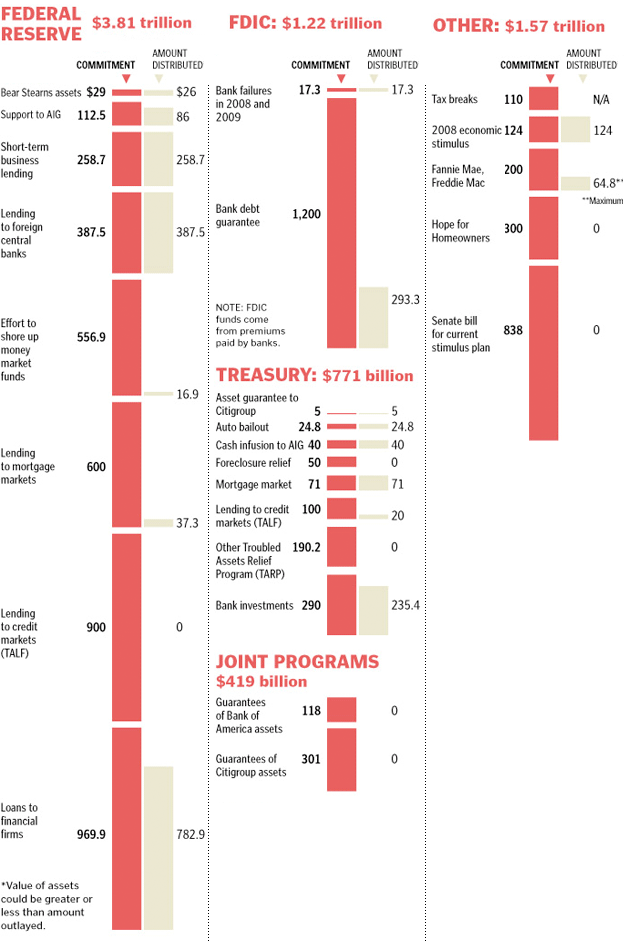
The total price tag for federal support stemming from
the financial crisis could reach $23.7 trillion in the long run, the government's top bailout watchdog says in a new report
to Congress.
Neil Barofsky, the inspector general for the Troubled
Asset Relief Program, plans to deliver his report Tuesday to the House Oversight and Government Reform Committee.
The $23.7 trillion figure is admittedly a high-ball
number and reflects the total potential gross exposure, but Barofsky in his prepared testimony notes that the TARP -- which
started as a $700 billion bailout -- has expanded well beyond that.
"TARP has evolved into a program of unprecedented scope,
scale and complexity. Moreover, TARP does not function in a vacuum but is rather part of the broader government efforts to
stabilize the financial system," the report says.
"The total potential federal government support could
reach up to $23.7 trillion," the report estimates, factoring in commitments from "dozens of programs" implemented throughout
the federal government since 2007
"A trillion here, a trillion there will get things
stabilized"
Gary Schilling
I think that what the government has done so far, despite the trillions of dollars,
is questionable. People are miserable. They are saving all their cash, their social-security checks, and many people are still
in big trouble. Modifications of troubled mortgages are proceeding slowly, and those that are modified are proving to be serial
defaulters. More than 50 percent are behind in payments.
What people need is a consumer subsidy to help them handle
their mortgages. The government gave trillions of dollars for bailout programs -- now it should give another trillion to consumers.
A trillion here, a trillion there will get things stabilized...
Of $3.1 trillion in total commercial real estate debt, banks and thrifts hold $1.7 trillion
in mortgages. Another $700 billion is securitized, and the delinquency rate more than tripled in six months, to 2.7 percent
in May, the highest in a decade. Default rates are expected to hit 30 percent or more, and loss rates could reach 13 percent...
The estimates are that $155 billion in securitizations are coming due by 2012, and two-thirds
won't qualify for refinancing as prices drop 35 percent to 45 percent from their 2007 peaks. Meanwhile, $525 billion of commercial mortgages
held by banks and thrifts will come due by 2012. About 50 percent won't qualify for refinancing because they exceed 90 percent
of the underlying property value. Lenders prefer loans of no more than 65 percent...
I have been saying it will go for a second stimulus package. The first one was for education,
health and the environment, and was intended to put people to work. There is a lot of resistance to another package, though,
and further increases to the deficit. Our estimate is that $200 billion went to stimulus for infrastructure, unemployment
and tax cuts, and the rest was for social agenda: education, health and environment...
It will extend into early 2010. Only by then is enough fiscal stimulus likely to be pumped out to stabilize
consumer retrenchment. By then, enough excess house inventories may be absorbed to moderate the downward pressure on prices.
By then, most of the global financial woes should be at least stabilized. Nevertheless, a weak recovery is likely to follow,
one so tepid and with such high unemployment that you may not know it has arrived.
Is securitization like a financial terrorist attack?
A recent editorial in the Wall Street Journal makes it clear that securitization -- the packaging of thousands of loans
into securities -- has all the features of a successful terrorist attack. How so? It entered the financial system without
attracting any negative notice at all, found its way into the heart of the global financial markets and, once ensconced there,
proceeded to destroy the system (and is continuing to do so now).
In fact, securitization is proving to be more costly from a financial standpoint than everything that al Qaeda has cooked
up against us. So far, the financial rescue has cost $12.8 trillion and that figure could reach as high as $23.7 trillion.
The wars in Iraq and Afghanistan cost only $3 trillion at most. (To be fair, though, securitization has taken a far smaller
human toll than al Qaeda.)
Why do I blame securitization for our current financial calamity? Remember toxic waste? That's the $13 trillion worth
of residential mortgage-backed securities (MBS) -- bundles of mortgages sliced by level of risk -- and collateralized debt
obligations (CDOs) -- mixed bundles of commercial mortgages, auto loans, student loans, credit card receivables, small business
loans, and corporate loans sorted by risk level -- residing on the books of financial institutions around the globe.
Securitization is not the sole problem -- it is the fact that some financial institutions (FIs) leveraged up their balance
sheets 50:1 to buy the toxic waste. And they bought it because they believed that in a low-interest-rate environment, they
thought they were getting a safe, higher-yielding investment...
Under current law, the federal budget is on an unsustainable
path, because federal debt will continue to grow much faster than the economy over the long run. Although great uncertainty
surrounds long-term fiscal projections, rising costs for health care and the aging of the population will cause federal spending
to increase rapidly under any plausible scenario for current law. Unless revenues increase just as rapidly, the rise in spending
will produce growing budget deficits. Large budget deficits would reduce national saving, leading to more borrowing from abroad
and less domestic investment, which in turn would depress economic growth in the United States. Over time, accumulating
debt would cause substantial harm to the economy. The following chart shows our projection of federal debt
relative to GDP under the two scenarios we modeled.
Federal Debt Held by the Public Under CBO’s Long-Term Budget Scenarios
(Percentage of GDP)
Keeping deficits and debt from reaching these levels would
require increasing revenues significantly as a share of GDP, decreasing projected spending sharply, or some combination of
the two.
Measured relative to GDP, almost all of the projected growth
in federal spending other than interest payments on the debt stems from the three largest entitlement programs—Medicare,
Medicaid, and Social Security. For decades, spending on Medicare and Medicaid has been growing faster than the economy. CBO
projects that if current laws do not change, federal spending on Medicare and Medicaid combined will grow from roughly 5 percent
of GDP today to almost 10 percent by 2035. By 2080, the government would be spending almost as much, as a share of the economy,
on just its two major health care programs as it has spent on all of its programs and services in recent years.
In CBO’s estimates, the increase in spending for Medicare
and Medicaid will account for 80 percent of spending increases for the three entitlement programs between now and 2035 and
90 percent of spending growth between now and 2080. Thus, reducing overall government spending relative to what would occur
under current fiscal policy would require fundamental changes in the trajectory of federal health spending. Slowing the growth
rate of outlays for Medicare and Medicaid is the central long-term challenge for fiscal policy.
Under current law, spending on Social Security is also projected
to rise over time as a share of GDP, but much less sharply. CBO projects that Social Security spending will increase from
less than 5 percent of GDP today to about 6 percent in 2035 and then roughly stabilize at that level. Meanwhile, as depicted
below, government spending on all activities other than Medicare, Medicaid, Social Security, and interest on federal debt—a
broad category that includes national defense and a wide variety of domestic programs—is projected to decline or stay
roughly stable as a share of GDP in future decades.
Spending Other Than That for Medicare, Medicaid, Social Security,
and Net Interest, 1962 to 2080 (Percentage of GDP)
Federal spending on Medicare, Medicaid, and Social Security
will grow relative to the economy both because health care spending per beneficiary is projected to increase and because the
population is aging. As shown in the figure below, between now and 2035, aging is projected to make the larger contribution
to the growth of spending for those three programs as a share of GDP. After 2035, continued increases in health care spending
per beneficiary are projected to dominate the growth in spending for the three programs.
Factors Explaining Future Federal Spending on Medicare, Medicaid,
and Social Security (Percentage of GDP)
The current recession and policy responses have little effect
on long-term projections of noninterest spending and revenues. But CBO estimates that in fiscal years 2009 and 2010, the federal
government will record its largest budget deficits as a share of GDP since shortly after World War II. As a result of those
deficits, federal debt held by the public will soar from 41 percent of GDP at the end of fiscal year 2008 to 60 percent at
the end of fiscal year 2010. This higher debt results in permanently higher spending to pay interest on that debt. Federal
interest payments already amount to more than 1 percent of GDP; unless current law changes, that share would rise to 2.5 percent
by 2020.
This entry was posted on Thursday, July
16th, 2009
VP Joe Biden: ‘We Have to Go Spend Money to Keep From Going Bankrupt’
Vice President Joe Biden (Photo
by Penny Starr/CNSNews.com)
Vice President Joe Biden
told people attending an AARP town hall meeting that unless the Democrat-supported health care plan becomes law the nation
will go bankrupt and that the only way to avoid that fate is for the government to spend more money...the president
knows, and I know, that the status quo is simply not acceptable,” Biden said...“It’s totally unacceptable.
And it’s completely unsustainable. Even if we wanted to keep it the way we have it now. It can’t do it financially.”
“We’re
going to go bankrupt as a nation,” Biden said.
“Now, people when I say that look at me and say,
‘What are you talking about, Joe? You’re telling me we have to go spend money to keep from going bankrupt?’”
Biden said. “The answer is yes, that's what I’m telling you.”
IT HAS ONLY BEEN IN THE LAST 8 YEARS
THAT THE % OF INCOME SPENT BY AMERICANS HAS BEEN IN SINGLE DIGITS...before the year 2000 it was over 10% and until the 1950's
it was over 20%.
Estudio económico de América Latina
y el Caribe 2008-2009
Comisión Económica para América
Latina y el Caribe (CEPAL)
RESUMEN
La publicación del sexagésimo primer Estudio económico de América Latina y el Caribe, correspondiente
al bienio 2008-2009, tiene lugar en un momento crítico del desarrollo económico de América Latina y el Caribe. Se interrumpió
una fase de crecimiento de duración y características inéditas en la historia reciente y la región sufre una contracción de
su producto, con efectos negativos en el bienestar de la población que inevitablemente se reflejarán en retrocesos de las
variables sociales. Dos características diferencian la situación actual de los muchos episodios de crisis que afectaron a
la región en las décadas pasadas. En primer lugar, la crisis no se originó en la región ni tampoco en otra economía emergente,
sino en la economía más grande del mundo, por lo que tuvo efectos a nivel global, con significativas diferencias entre países
y regiones. En segundo lugar, si bien con excepciones significativas, al disminuir sus deudas e incrementar sus reservas durante
la fase expansiva de los años pasados, la región en su conjunto está mejor preparada para enfrentar esta crisis que en episodios
previos y que otras regiones. Estas características, por su parte, tienen dos consecuencias: la tasa de contracción proyectada
para el año en curso es relativamente moderada —si bien nuevamente con marcadas diferencias entre los países de la región—
y la recuperación depende en gran parte de la reactivación de la economía mundial en su conjunto.
En la primera parte de este Estudio económico se analizan los canales a través de los cuales
la crisis está afectando a las economías de la región y su efecto en variables como el crecimiento económico, el empleo y
los indicadores del sector externo. También se presentan las fortalezas y debilidades para enfrentar las consecuencias de
la crisis mundial y las políticas económicas aplicadas en este contexto. El análisis abarca la evolución de la economía regional
en 2008 y el primer semestre de 2009 y concluye con un examen de las perspectivas de la región en el segundo semestre del
año, todo ello respaldado con un amplio anexo estadístico.
Las características de la recuperación dependen en gran medida de la evolución de la economía
mundial, pero también de la manera en que los países se preparan para los desafíos del futuro. A este respecto, es importante
el manejo macroeconómico de la crisis, pero también, como la CEPAL ha enfatizado en repetidas ocasiones, la construcción de
los fundamentos para un crecimiento sostenido, basado en una creciente competitividad sistémica, una mayor cohesión social
y una estructura productiva y de consumo ambientalmente sostenible. Por lo tanto, una tarea clave de los países de la región
es el desarrollo de instituciones acordes con estos objetivos. En este Estudio económico se analiza el caso de la institucionalidad
laboral, que en el pasado reciente ha sido objeto de confrontaciones polarizadas y debates sumamente controvertidos. No obstante,
actualmente se han abierto espacios para un debate más equilibrado que tome en cuenta que esta institucionalidad debe cumplir
con varios objetivos, lo que no permite la imposición de visiones particulares.
En el primer capítulo de la segunda parte se revisa el desarrollo histórico de la institucionalidad
laboral de la región, la gran variedad existente al respecto entre los países y el papel de los principales componentes de
esta institucionalidad. En el segundo capítulo, se presentan los cambios recientes en algunas instituciones específicas, el
salario mínimo, los sindicatos y la negociación colectiva, así como los instrumentos de protección al desempleo, y se analizan
sus efectos sobre el funcionamiento del mercado de trabajo y las opciones para su perfeccionamiento. En el tercer capítulo,
se examinan las políticas activas del mercado de trabajo, específicamente la capacitación y formación profesional, los servicios
públicos de empleo, la generación directa e indirecta de empleo y el fomento del trabajo independiente. En el cuarto capítulo,
se discuten alternativas de política para promover la inserción laboral productiva de los jóvenes y las mujeres, quienes con
frecuencia son marginados y discriminados en el mercado laboral. El quinto capítulo resume las conclusiones sobre los desafíos
de la institucionalidad laboral y los mecanismos para avanzar en el cumplimiento de sus objetivos.
Por último, se analiza la coyuntura de los países de América Latina y el Caribe en 2008 y el
primer semestre de 2009. A la información de las notas de cada país se suman los datos del anexo estadístico en el que se
muestra la evolución de los principales indicadores económicos. Estas notas, al igual que el anexo estadístico específico
para cada país, se publican en el CD-ROM que acompaña la versión impresa, así como también en la página web de la CEPAL (www.cepal.org). En los cuadros del anexo estadístico se puede visualizar rápidamente la información de los
últimos años y crear cuadros en hojas electrónicas. En el disco se encuentran también las versiones electrónicas de la primera
y la segunda parte.
La información estadística de la presente publicación ha sido actualizada al 30 de junio de
2009. Haz clic en su pais para el contenido...
From FORBES: The U.S. economic outlook
remains very weak.
The United States is in the twentieth month of a recession that has been by
far the longest and most severe of the postwar period. While comparisons with the Great Depression are frequent and appropriate
(especially if we look at the pace of contraction in industrial production), the aggressiveness of policy measures has significantly
reduced the probability of a near-depression.
"Banking Establishments Are More Dangerous Than Standing Armies." Thomas Jefferson
(1743-1826), 3rd US President
"...
a serious depression seems improbable; [we expect] recovery of business next spring, with further improvement in the fall."
Harvard Economic Society (HES), November 10, 1929
"While
the crash only took place six months ago, I am convinced we have now passed through the worst -- and with continued unity
of effort we shall rapidly recover. There has been no significant bank or industrial failure. That danger, too, is safely
behind us." President Herbert Hoover, May 1, 1930
"Under
a paper money system, a determined government can always generate higher spending and hence positive inflation." Fed Chairman
Ben Bernanke, in 2002
Many
observers think that “prosperity is around the corner” and that this recession, like others since World War II,
will end as soon as the stock market, as a leading indicator, recovers and people start spending again. This is a myopic view
of the current economic big picture.
In fact, since the peak of the housing bubble (in the U.S.) in 2005, the onslaught of the subprime financial
crisis in August 2007 and the beginning of the recession in December 2007, the U. S. economy, and to a certain extent, the
world economy, have entered a period of protracted adjustments. For sure, there will be some quarters of positive economic
growth ahead and the recession may be declared officially over in the coming months, but the radical economic reorganization
that is taking place will go on for years to come...........................................................................................
For
now, a quick resurgence of inflation is only a remote possibility. This is nevertheless a possibility, considering that central
banks have a tendency to overdo the printing of fiat money. In fact, if governements attempt to print their way out of the
coming structural demographic problem, they will end up generating an hyperstagflation. In a nutshell, this is what the huge
international dollar-denominated bond market sees and fears, at a time when it has to absorb a huge supply of new bond issues.
In reality, the bond market will always win against any central bank, any time. The solvency woes and the likely default of
the state of California on its outstanding debt will only add to the anxiety.
A
few weeks ago, I warned against the risk of future long term interest rates hikes and future U.S. dollar depreciation following
the decisions by the U.S. Treasury and by the Fed to flood the markets with trillions of dollars of new Treasury bond issues
and with newly printed money. The undertow is coming even faster than I thought. Only when the markets expect relative economic
stagnation and a lasting deflationary environment will long term interest rates taper off.
Brace yourself and hold on to your britches. There is a rough economic decade ahead.
In a year of eye-popping numbers, add one more: The government's annual
budget deficit has topped $1 trillion.
And
with three months left in the budget year, it will actually get even worse. The administration is projecting that the deficit
will hit $1.84 trillion for the current budget year, four times the size of last year's deficit. Last year's number was the
all-time leader at the time, at $454.8 billion — a figure that now seems rather puny in comparison.
Here
are some questions and answers about what happened to the federal budget, which began the new century with the longest string
of surpluses in seven decades.
Q:
Just how did we go from a string of four consecutive surpluses from 1998 through 2001 to the fix we are in now?
A:
The surpluses at the end of the last decade reflected a boom-time economy, which was enjoying the longest uninterrupted expansion
in U.S. history.
When
the last recession began in 2001, that cut into revenues. Then the government's budget picture darkened even further after
the 2001 terrorist attacks as government spending was increased to pay for wars in Afghanistan and Iraq.
“I don’t think the worst
is over ... It’s very likely that more jobs will be lost. It would not be surprising if GDP has not yet reached its
low. What does appear to be true is that the sense of panic in the markets and freefall in the economy has subsided and one
does not have the sense of a situation as out of control as a few months ago.”
As the panic
has subsided, the trendy new economic issue has become “exit strategy” – as in, when and how do governments
shift from costly and aggressive intervention to levels of spending and taxation that are sustainable over the long term?
Summers rejects the premise of the
question. “I actually think that the right measures for doing the right things about the long-run deficit will also
increase confidence, hold down long-term interest rates and capital costs, make mortgages cheaper, make mortgage rates lower
and so will contribute directly to recovery. So I don’t buy the notion that there is some conflict between the budget
imperative for growth and some other budget imperatives.”
Larry Summers, director of the US president’s
National Economic Council in interview with Financial Times
DE LA IZQUIERDA...si o no esta de acuerdo, deberia leer esto
Crisis del Capitalismo, el ALBA TCP y la unidad de la Clase
Trabajadora
Consideraciones sobre la Crisis del Capitalismo
Vivimos momentos históricos estelares, la crisis mundial del capitalismo apenas ha mostrado
sus primeros síntomas en las economías de los centros del imperialismo. La crisis financiera cada vez más es acompañada por
una crisis del crédito que repercutirá sin lugar a dudas a las esferas productivas del capitalismo. En este sentido, los monopolios
industriales han sido golpeados de forma contundente y unos que incluso constituían modelos del capitalismo monopolista transnacionalizado
han caído estrepitosamente, General Motors es el caso más dramático, porque era considerada la joya de la industria automovilística
norteamericana.
Está claro para muchos que la crisis actual del capitalismo no tiene precedentes, ya que
afecta de forma simultánea diversos aspectos del sistema; a la profunda crisis financiera, se le suman crisis energéticas,
alimentarias y la más grave, una crisis ambiental creciente. Eso sin contar el conjunto de crisis y contradicciones políticas,
sociales, humanitarias que afectan a diversos pueblos: agresiones imperialistas, los genocidios, las guerras civiles, el narcotráfico,
el comercio sexual, son sólo algunos de los fenómenos degradantes inherentes al capitalismo realmente existente, el Comandante
Hugo Chávez ha hablado en este sentido de una profunda crisis moral...
...el ALBA TCP
tiene por objetivo la transformación de las sociedades latinoamericanas, haciéndolas más justas, cultas, participativas y
solidarias y por tanto está concebida como un proceso integral destinado a asegurar la eliminación de las desigualdades sociales
y fomentar la calidad de vida y una participación efectiva de los pueblos en la conformación de su propio destino.
Russian President Dmitry Medvedev holds up an 'worldwide coin' as he discusses a
possible
global currency
Even if Russia's call for a
global currency failed to gain much traction at a G8 summit, President Dmitry Medvedev took home a coin meant to symbolize that the dream may one day come true.
The Russian leader proudly displayed the coin, which bears the English words "United
Future World Currency", to journalists after the summit wrapped up in the quake-hit Italian town of L'Aquila.
Medvedev said that although the coin, which resembled a euro and featured the image
of five leaves, was just a gift given to leaders it showed that people were beginning to think seriously
about a new global currency.
____________________
Role of information
technology in economic
recovery
***
about half of today's Fortune 500 companies were launched during a recession...
***
companies can help themselves and the country out of its funk through research, development and innovation...
***
"There is an unnatural opportunity and responsibility to help drive the productivity and innovation that can let the economy
come back and grow again”...
***
“It is a tough time, but it is a time for those of us in the technology industry to say, ‘Hey, it's our
time. It's our time to do something great.'”
The world financial crisis offers organized crime
a unique opportunity to return to the global banking systems from which it had been barred by sanctions imposed after the
Sept. 11, 2001 terror attacks, the U.N.'s top anti-crime official said
Pope Benedict issued anambitious call to reformthe way the world works on Tuesday shortly before
its most powerful leaders meet at theG8 summit in Italy. His latest encyclical, entitled “Charity in Truth,” presents along list of stepshe thinks are needed to overcome the financial
crisis and shift economic activity from the profit motive to a goal of solidarity of all people.
Following are some of his proposals. The italics are from theoriginal text.
“There is urgent need of a true world political authority. ..to
manage the global economy; to revive economies hit by the crisis; to avoid any deterioration of the present crisis and the
greater imbalances that would result; to bring about integral and timely disarmament, food security and peace; to guarantee
the protection of the environment and to regulate migration… such an authority would need to be universally recognized
and to be vested with the effective power to ensure security for all, regard for justice, and respect for rights.”
The economy needs ethics in order to function correctly-
not any ethics whatsoever, but an ethics which is people-centred…”
“Financiers must rediscover the genuinely ethical foundation of their activity, so as
not to abuse the sophisticated instruments which can serve to betray the interests of savers. Right intention, transparency,
and the search for positive results are mutually compatible and must never be detached from one another.”
“Without doubt, one of the greatest risks for businesses is that they are almost exclusively
answerable to their investors, thereby limiting their social value… there is nevertheless a growing conviction thatbusiness management cannot concern itself only with the interests of the proprietors,
but must also assume responsibility for all the other stakeholders who contribute to the life of the business: the workers,
the clients, the suppliers of various elements of production, the community of reference… What should be avoided is
a speculativeuse of financial resourcesthat
yields to the temptation of seeking only short-term profit, without regard for the long-term sustainability of the enterprise,
its benefit to the real economy and attention to the advancement, in suitable and appropriate ways, of further economic initiatives
in countries in need of development.”
“One possible approach to development aid would be to apply effectively what is known
as fiscal subsidiarity, allowing citizens to decide how to allocate a portion of the taxes they pay to the State.”
Sigue la síntesis facilitada por la Oficina de Prensa
de la Santa Sede de la nueva encíclica de Benedicto XVI, "Caritas in veritate": La Caridad en la verdad, sobre el desarrollo
humano integral en la caridad y en la verdad .
La Encíclica, publicada hoy, consta de una introducción,
seis capítulos y una conclusión y está fechada el 29 de junio de 2009, solemnidad de San Pedro y San Pablo.
"En la Introducción -explica la síntesis- el Papa recuerda
que la caridad es "la vía maestra de la doctrina social de la Iglesia". Por otra parte, dado el "riesgo de ser mal entendida
o excluida de la ética vivida" advierte de que "un cristianismo de caridad sin verdad se puede confundir fácilmente con una
reserva de buenos sentimientos, provechosos para la convivencia social, pero marginales".
"El desarrollo (...) necesita esta verdad", escribe
Benedicto XVI y analiza "dos criterios orientadores de la acción moral: la justicia y el bien común. (...) Todo cristiano
está llamado a esta caridad, según su vocación y sus posibilidades de incidir en la polis. Ésta es la vía institucional del
vivir social".
El primer capítulo está dedicado al "Mensaje de la
"Populorum progressio" de Pablo VI que "reafirmó la importancia imprescindible del Evangelio para la construcción de la sociedad
según libertad y justicia". "La fe cristiana -escribe Benedicto XVI- se ocupa del desarrollo no apoyándose en privilegios
o posiciones de poder (...) sino solo en Cristo". El pontífice evidencia que "las causas del subdesarrollo no son principalmente
de orden material". Están ante todo en la voluntad, el pensamiento y todavía más "en la falta de fraternidad entre los hombres
y los pueblos".
"El desarrollo humano en nuestro tiempo" es el tema
del segundo capítulo. "El objetivo exclusivo del beneficio, cuando es obtenido mal y sin el bien común como fin último -reitera
el Papa- corre el riesgo de destruir riqueza y crear pobreza" Y enumera algunas distorsiones del desarrollo: una actividad
financiera "en buena parte especulativa", los flujos migratorios "frecuentemente provocados y después no gestionados adecuadamente
o la explotación sin reglas de los recursos de la tierra". Frente a esos problemas ligados entre sí, el Papa invoca "una nueva
síntesis humanista", constatando después que "el cuadro del desarrollo se despliega en múltiples ámbitos: (...) crece la riqueza
mundial en términos absolutos, pero aumentan también las desigualdades (...) y nacen nuevas pobrezas".
"En el plano cultural -prosigue- (...) las posibilidades
de interacción" han dado lugar a "nuevas perspectivas de diálogo", (...) pero hay un doble riesgo". En primer lugar "un eclecticismo
cultural" donde las culturas se consideran "sustancialmente equivalentes". El peligro opuesto es el de "rebajar la cultura
y homologar los (...) estilos de vida". Benedicto XVI recuerda "el escándalo del hambre" y auspicia "una ecuánime reforma
agraria en los países en desarrollo".
Asimismo, el pontífice evidencia que el respeto por
la vida "en modo alguno puede separarse de las cuestiones relacionadas con el desarrollo de los pueblos" y afirma que "cuando
una sociedad se encamina hacia la negación y la supresión de la vida acaba por no encontrar la motivación y la energía necesarias
para esforzarse en el servicio del verdadero bien del hombre".
Otro aspecto ligado al desarrollo es el "derecho a
la libertad religiosa. La violencia - escribe el Papa-, frena el desarrollo auténtico" y esto "ocurre especialmente con el
terrorismo de inspiración fundamentalista".
"Fraternidad, desarrollo económico y sociedad civil"
es el tema del tercer capítulo, que se abre con un elogio de la experiencia del don, no reconocida a menudo, "debido a una
visión de la existencia que antepone a todo la productividad y la utilidad. (...) El desarrollo, (...) si quiere ser auténticamente
humano, necesita en cambio dar espacio al principio de gratuidad", y por cuanto se refiere al mercado la lógica mercantil,
ésta debe estar "ordenada a la consecución del bien común, que es responsabilidad sobre todo de la comunidad política".
Retomando la encíclica "Centesimus annus" indica "la
necesidad de un sistema basado en tres instancias: el mercado, el Estado y la sociedad civil" y espera en "una civilización
de la economía". Hacen falta "formas de economía solidaria" y "tanto el mercado como la política tienen necesidad de personas
abiertas al don recíproco".
El capítulo se cierra con una nueva valoración del
fenómeno de la globalización, que no se debe entender solo como "un proceso socio-económico". (...) La globalización necesita
"una orientación cultural personalista y comunitaria abierta a la trascendencia (...) y capaz de corregir sus disfunciones".
En el cuarto capítulo, la Encíclica trata el tema del
"Desarrollo de los pueblos, derechos y deberes, ambiente". "Gobierno y organismos internacionales -se lee- no pueden olvidar
"la objetividad y la indisponibilidad" de los derechos. A este respecto, se detiene en las "problemáticas relacionadas con
el crecimiento demográfico".
Reafirma que la sexualidad no se puede "reducir a un
mero hecho hedonístico y lúdico". Los Estados, escribe, "están llamados a realizar políticas que promuevan la centralidad
de la familia".
"La economía -afirma una vez más- tiene necesidad de
la ética para su correcto funcionamiento; no de cualquier ética sino de una ética amiga de la persona". La misma centralidad
de la persona, escribe, debe ser el principio guía "en las intervenciones para el desarrollo" de la cooperación internacional.
(...) Los organismos internacionales -exhorta el Papa- deberían interrogarse sobre la real eficacia de sus aparatos burocráticos",
"con frecuencia muy costosos".
El Santo Padre se refiere más adelante a las problemáticas
energéticas. "El acaparamiento de los recursos" por parte de Estados y grupos de poder, denuncia, constituyen "un grave impedimento
para el desarrollo de los países pobres". (...) "Las sociedades tecnológicamente avanzadas -añade- pueden y deben disminuir
la propia necesidad energética", mientras debe "avanzar la investigación sobre energías alternativas".
"La colaboración de la familia humana" es el corazón
del quinto capítulo, en el que Benedicto XVI pone de relieve que "el desarrollo de los pueblos depende sobre todo del reconocimiento
de ser una sola familia". De ahí que, se lee, la religión cristiana puede contribuir al desarrollo "solo si Dios encuentra
un puesto también en la esfera pública".
El Papa hace referencia al principio de subsidiaridad,
que ofrece una ayuda a la persona "a través de la autonomía de los cuerpos intermedios". La subsidiariedad, explica, "es el
antídoto más eficaz contra toda forma de asistencialismo paternalista" y es más adecuada para humanizar la globalización".
Asimismo, Benedicto XVI exhorta a los Estados ricos
a "destinar mayores cuotas" del Producto Interno Bruto para el desarrollo, respetando los compromisos adquiridos. Y augura
un mayor acceso a la educación y, aún más, a la "formación completa de la persona" afirmando que, cediendo al relativismo,
se convierte en más pobre. Un ejemplo, escribe, es el del fenómeno perverso del turismo sexual. "Es doloroso constatar -observa-
que se desarrolla con frecuencia con el aval de los gobiernos locales".
El Papa afronta a continuación al fenómeno "histórico"
de las migraciones. "Todo emigrante, afirma, "es una persona humana" que "posee derechos que deben ser respetados por todos
y en toda situación".
El último párrafo del capítulo lo dedica el Pontífice
"a la urgencia de la reforma" de la ONU y "de la arquitectura económica y financiera internacional". Urge "la presencia de
una verdadera Autoridad política mundial" (...) que goce de "poder efectivo".
El sexto y último capítulo está centrado en el tema
del "Desarrollo de los pueblos y la técnica". El Papa pone en guardia ante la "pretensión prometeica" según la cual "la humanidad
cree poderse recrear valiéndose de los 'prodigios' de la tecnología". La técnica, subraya, no puede tener una "libertad absoluta".
El campo primario "de la lucha cultural entre el absolutismo
de la tecnicidad y la responsabilidad moral del hombre es hoy el de la bioética", explica el Papa, y añade: "La razón sin
la fe está destinada a perderse en la ilusión de la propia omnipotencia". La cuestión social se convierte en "cuestión antropológica".
La investigación con embriones, la clonación, lamenta el Pontífice, "son promovidas por la cultura actual", que "cree haber
desvelado todo misterio". El Papa teme "una sistemática planificación eugenésica de los nacimientos".
En la Conclusión de la Encíclica, el Papa subraya que
el desarrollo "tiene necesidad de cristianos con los brazos elevados hacia Dios en gesto de oración", de "amor y de perdón,
de renuncia a sí mismos, de acogida al prójimo, de justicia y de paz".
The economy will not
recover until housing prices stabilize. Housing affects not just American families but banks, credit markets and construction
business and jobs. Economics editor David Wessel explains in the video below:
El vicepresidente de Estados Unidos Joe Biden dijo que el gobierno de Barack Obama "subestimó la gravedad
del estado de la economía", pero defendió su paquete de estímulo y consideró que el plan creará más empleos conforme aumenta
su ritmo de gasto.
_________________________________________
Vice President Biden acknowledged today that the administration underestimated the depth of the
economic recession months ago as it prepared a recovery package that is only now beginning to take effect... "The truth
of the matter was, no one anticipated, no one expected that that recovery package would in fact be in a position at this point
of having distributed the bulk of the money."
"DEBT EXPLOSION"
The US economy is lurching towards crisis with long-term interest rates on course
to double, crippling the country’s ability to pay its debts and potentially plunging it into another recession, according
to a study by the US’s own central bank
BECAUSE OF ITS IMPORTANCE AT THIS
CRITICAL TIME, THE FOLLOWING ARTICLE IS FURNISHED IN ITS ENTIRETY:
MOUNTAIN OF DEBT:
Rising debt may be next crisis
by
TOM RAUM
The Founding Fathers left one legacy not celebrated on Independence
Day but which affects us all. It's the national debt.
The country first got into debt to help pay for the Revolutionary
War. Growing ever since, the debt stands today at a staggering $11.4 trillion - equivalent to about $37,000 for each and every
American. And it's expanding by over $1 trillion a year.
The mountain of debt easily could become the next full-fledged
economic crisis without firm action from Washington, economists of all stripes warn.
"Unless we demonstrate a strong commitment to fiscal sustainability
in the longer term, we will have neither financial stability nor healthy economic growth," Federal Reserve Chairman Ben Bernanke
recently told Congress.
Higher taxes, or reduced federal benefits and services - or a
combination of both - may be the inevitable consequences.
The debt is complicating efforts by President Barack Obama and
Congress to cope with the worst recession in decades as stimulus and bailout spending combine with lower tax revenues to widen
the gap.
Interest payments on the debt alone cost $452 billion last year
- the largest federal spending category after Medicare-Medicaid, Social Security and defense. It's quickly crowding out all
other government spending. And the Treasury is finding it harder to find new lenders.
The United States went into the red the first time in 1790 when
it assumed $75 million in the war debts of the Continental Congress.
Alexander Hamilton, the first treasury secretary, said, "A national
debt, if not excessive, will be to us a national blessing."
Some blessing.
Since then, the nation has only been free of debt once, in 1834-1835.
The national debt has expanded during times of war and usually
contracted in times of peace, while staying on a generally upward trajectory. Over the past several decades, it has climbed
sharply - except for a respite from 1998 to 2000, when there were annual budget surpluses, reflecting in large part what turned
out to be an overheated economy.
The debt soared with the wars in Iraq and Afghanistan and economic
stimulus spending under President George W. Bush and now Obama.
The odometer-style "debt clock" near Times Square - put in place
in 1989 when the debt was a mere $2.7 trillion - ran out of numbers and had to be shut down when the debt surged past $10
trillion in 2008.
The clock has since been refurbished so higher numbers fit. There
are several debt clocks on Web sites maintained by public interest groups that let you watch hundreds, thousands, millions
zip by in a matter of seconds.
The debt gap is "something that keeps me awake at night," Obama
says.
He pledged to cut the budget "deficit" roughly in half by the
end of his first term. But "deficit" just means the difference between government receipts and spending in a single budget
year.
This year's deficit is now estimated at about $1.85 trillion.
Deficits don't reflect holdover indebtedness from previous years.
Some spending items - such as emergency appropriations bills and receipts in the Social Security program - aren't included,
either, although they are part of the national debt.
The national debt is a broader, and more telling, way to look
at the government's balance sheets than glancing at deficits.
According to the Treasury Department, which updates the number
"to the penny" every few days, the national debt was $11,518,472,742,288 on Wednesday.
The overall debt is now slightly over 80 percent of the annual
output of the entire U.S. economy, as measured by the gross domestic product.
By historical standards, it's not proportionately as high as during
World War II, when it briefly rose to 120 percent of GDP. But it's still a huge liability.
Also, the United States is not the only nation struggling under
a huge national debt. Among major countries, Japan, Italy, India, France, Germany and Canada have comparable debts as percentages
of their GDPs.
Where does the government borrow all this money from?
The debt is largely financed by the sale of Treasury bonds and
bills. Even today, amid global economic turmoil, those still are seen as one of the world's safest investments.
That's one of the rare upsides of U.S. government borrowing.
Treasury securities are suitable for individual investors and
popular with other countries, especially China, Japan and the Persian Gulf oil exporters, the three top foreign holders of
U.S. debt.
But as the U.S. spends trillions to stabilize the recession-wracked
economy, helping to force down the value of the dollar, the securities become less attractive as investments. Some major foreign
lenders are already paring back on their purchases of U.S. bonds and other securities.
And if major holders of U.S. debt were to flee, it would send
shock waves through the global economy - and sharply force up U.S. interest rates.
As time goes by, demographics suggest things will get worse before
they get better, even after the recession ends, as more baby boomers retire and begin collecting Social Security and Medicare
benefits.
While the president remains personally popular, polls show there
is rising public concern over his handling of the economy and the government's mushrooming debt - and what it might mean for
future generations.
If things can't be turned around, including establishing a more
efficient health care system, "We are on an utterly unsustainable fiscal course," said the White House budget director, Peter
Orszag.
Some budget-restraint activists claim even the debt understates
the nation's true liabilities.
The Peter G. Peterson Foundation, established by a former commerce
secretary and investment banker, argues that the $11.4 trillion debt figures does not take into account roughly $45 trillion
in unlisted liabilities and unfunded retirement and health care commitments.
That would put the nation's full obligations at $56 trillion,
or roughly $184,000 per American, according to this calculation.
at 2009 spring membership meeting of the Institute
of International Finance, June 11, 2009
There isn't much doubt that attempts to enforce strict application of mark-to-market accounting procedures has
contributed to confusion, uncertainty and inconsistencies among financial institutions. There is a strong case for reviewing
the application of so-called “fair value” standards to commercial banks, insurance companies and perhaps certain
other regulated financial institutions.
The problem is not only the difficulty of measuring value in highly disturbed market conditions.
More broadly, strict mark-to-market accounting entirely appropriate for trading operations and investment banks may introduce
a degree of volatility in reporting incompatible with the basic and essential business model of banks which inherently intermediate
maturity and credit risks.
At the same time, we should demand international consistency and professional judgment in setting
accounting standards. Both are today jeopardized. Political bodies in Europe or the United States or any other country are
simply not the appropriate venue for reaching well-considered judgments that can be enforced internationally. Instead, we
need a bit of patience as the International Accounting Standards Board carefully reviews the application of “fair value”
to banks and those other institutions subject to close official scrutiny in reporting.
Extracto de la Conferencia Central de Paul A. Volcker
en la reunión de membresía del Instituto de Finanzas Internacionales,
llevada a cabo el 11 de junio de 2009
No hay mucha duda de que los intentos de una estricta aplicación de procedimientos de ajuste del registro
contable al valor del mercado han contribuido a la confusión, incertidumbre e inconsistencias entre las instituciones financieras.
Hay argumentos de peso para reconsiderar la aplicación de las normas del llamado "valor razonable" a los bancos comerciales,
compañías de seguros y quizás algunas otras instituciones financieras reguladas.
El problema no es sólo la dificultad de medir el valor bajo condiciones altamente distorsionadas del
mercado. En términos más generales, una contabilidad estrictamente ajustada al valor del mercado (apropiada para las operaciones
comerciales y los bancos de inversión) pueden introducir una medida de volatilidad en los estándares de los reportes, incompatible
con el modelo básico y esencial del negocio de la banca (que inherentemente intermedia riesgos de madurez y de crédito).
A la vez, debemos exigir consistencia internacional y criterio
profesional en el establecimiento de las normas contables. Ambos están hoy en peligro. Los órganos políticos en Europa o los
Estados Unidos o en cualquier otro país simplemente no son apropiados para llegar a decisiones bien ponderadas que puedan
ser susceptibles de aplicación internacional. En cambio, necesitamos un poco de paciencia, mientras la Junta Internacional
de Normas Contables evalúa cuidadosamente la aplicación de "valor razonable" a los bancos y las demás instituciones sujetas
a estrecho control oficial de sus reportes.
The financial system is crashing and action must be taken by the US government to convert debt
into equity to produce a more stable environment, Nassim Taleb, author of "The Black Swan," told CNBC Thursday.
"You may have green shoots, whatever you want to call them, you may have temporary relief, but you are still
in a world that's breaking," Taleb said.
Anything that's fragile like the financial system will eventually crash, he said.
"We're in the middle of a crash," Taleb said. "So if I'm going to forecast something, it is that it's going
to get worse, not better."
The government needs to deleverage debt and not try stimulus packages that will inflate assets, he said.
"What makes me very pessimistic in not seeing any leadership or awareness on parts of government on what has
to be done, which is deleverage $40-to-$70 trillion," Taleb said.
"The monkey on our back is debt," he added.
As an example, Taleb said banks should not be sending demands for larger and larger sums from homeowner in
arrears on their mortgage. Instead the bank should offer to lower the monthly payments in return for part-ownership of the
property.
"People would be able to start from scratch on a healthy basis. You don't want to wait for foreclosure," he
said.
VIDEO BELOW: Part 1 of six in a series of interviews with author Eamonn Fingleton. Eamonn Fingleton
is the author of "In the Jaws of the Dragon: Americas Fate in the Coming Era of Chinese Hegemony. (June 28,2009)
RISKY DERIVATIVES: VIDEO BELOW- Complex financial instruments have become an integral part of
our banking system both domestically and internationally. Among the most complex and lucrative of these instruments
are derivatives. Derivatives are agreements between companies, typically financial titans, that exchange securitized
risks via contractual agreements.
Recommendations of the United Nations Conference on the World Financial and Economic Crisis
and Its Impact on Development
The way forward
51. We have come together to raise our collective
understanding of the impacts of the crisis and to contribute
in the fashioning of the global response, in an inclusive manner,
with actions at the national, regional and international levels.
52. We will strive to combine our short-term responses
to meet the immediate impact of the financial and economic
crisis, particularly on the most vulnerable countries,
with medium- and long-term responses that necessarily involve the pursuit
of development and the review of the global economic system. In this context, we propose the following course of action:
(a) Strengthen the capacity, effectiveness and efficiency
of the United Nations; enhance the coherence and coordination
of policies and actions between the United Nations, international
financial institutions and relevant regional organizations;
(b) Further develop the United Nations development
system’s comprehensive crisis response in support
of national development strategies through a coordinated
approach by United Nations funds and programmes, specialized agencies
and the international financial institutions at country level. The response must continue to be led by programme countries and, in this context, address vulnerabilities caused or exacerbated by the crisis and further strengthen national ownership. It should build on steps already taken by the United Nations development system, in particular at the country level. We urge the international community to ensure adequate support to the United Nations development system’s crisis response;
(c) Explore ways to strengthen international cooperation
in the area of international migration and development,
in order to address the challenges of the current economic
and financial crisis on migration and migrants, taking into account the
related work and activities of the United Nations funds and programmes, regional commissions and specialized agencies and of other international organizations, such as the International Organization for Migration.
53. We request the General Assembly and the Economic
and Social Council, as well as the United Nations funds
and programmes and specialized agencies, to take full advantage
of their advocacy role to promote recovery and development of the developing
countries, especially the most vulnerable among them.
54. We invite the General Assembly to establish
an ad hoc open-ended working group of the General Assembly
to follow up on the issues contained in the present outcome
document, and to submit a report on the progress of its work to the General Assembly before the end of the sixty-fourth session.
55. We encourage the President of the General Assembly
to make the world financial and economic crisis and its
impact on development a main theme of the general debate
of the sixty-fourth session of the General Assembly.
56. We request the Economic and Social Council:
(a) To consider the promotion and enhancement of
a coordinated response of the United Nations development
system and specialized agencies in the follow-up and implementation
of this outcome document, in order to advance consistency and coherence
in support of consensus-building around policies related to the world financial and economic crisis and its impact on development;
(b) To make recommendations to the General Assembly,
in accordance with the Doha Declaration of 2 December 2008
(General Assembly resolution 63/239, annex), for a strengthened
and more effective and inclusive intergovernmental process
to carry out the financing for development follow-up;
(c) Examine the strengthening of institutional arrangements
to promote international cooperation in tax matters, including
the United Nations Committee of Experts on International
Cooperation in Tax Matters;
(d) Review the implementation of the agreements
between the United Nations and the Bretton Woods institutions
in collaboration with these institutions,
focusing in particular on enhancing collaboration
and cooperation between the United Nations and the Bretton
Woods institutions, as well as on the opportunities for
contributing to advancing their respective mandates;
(e) Consider and make recommendations to the General
Assembly regarding the possible establishment of an ad
hoc panel of experts on the world economic and financial
crisis and its impact on development. The panel could provide independent technical expertise and analysis, which would contribute to informing international action and political decision-making and fostering constructive dialogues and exchanges among policymakers, academics, institutions and civil society.
57. We request the Secretary-General to report to
the Economic and Social Council on a regular basis on the
work of the High-level Task Force on the Global Food Security
Crisis.
Recomendaciones de la Conferencia de la Organización de las Naciones Unidas sobre la crisis
financiera y económica mundial y sus efectos en el desarrollo
El camino a seguir
51. Nos hemos reunido para lograr un mayor entendimiento
colectivo de los efectos de la crisis y para contribuir
a formular una respuesta mundial, de forma inclusiva, con
medidas a nivel nacional, regional e internacional.
52. Nos esforzaremos por combinar nuestras respuestas
a corto plazo destinadas a afrontar los efectos inmediatos
de la crisis financiera y económica, especialmente en los
países más vulnerables, con respuestas a medio y largo plazo que abarquen necesariamente el logro del desarrollo y el examen del sistema económico mundial. En este contexto, proponemos las siguientes medidas:
a) Fortalecer la capacidad, la eficacia y la eficiencia
de las Naciones Unidas; aumentar la coherencia y la coordinación
de las políticas y las medidas entre las Naciones Unidas,
las instituciones financieras internacionales y las organizaciones
regionales pertinentes;
b) Seguir desarrollando la respuesta general a la
crisis del sistema de las Naciones Unidas para el desarrollo
en apoyo de las estrategias nacionales de desarrollo mediante
un enfoque coordinado de los fondos y programas de las Naciones
Unidas, los organismos especializados y las instituciones financieras internacionales a nivel de los países. La respuesta debe seguir estando dirigida por los países donde se ejecutan programas y, en este contexto, intentar hacer frente a las vulnerabilidades causadas o agravadas por la crisis y fortalecer en mayor medidala implicación nacional. Debe basarse en las medidas que ya han sido adoptadas por el sistema de las Naciones Unidas para el desarrollo, en particular a nivel de los países. Instamos a la comunidad internacional a que garantice el apoyo adecuado a la respuesta del sistema de las Naciones Unidas para el desarrollo frente a la crisis;
c) Estudiar formas de fortalecer la cooperación
internacional en el ámbito de la migración internacional
y el desarrollo, a fin de intentar solucionar los problemas
que la actual crisis económica y financiera plantea para la migración y los migrantes, teniendo en cuenta la labor y las actividades conexas de los fondos y programas, las comisiones regionales y los organismos especializados de las Naciones Unidas y de otras organizaciones internacionales, como la Organización Internacional para las Migraciones.
53.
Pedimos a la Asamblea General y al Consejo Económico y Social, así como a los fondos y programas y los organismos especializados de las Naciones Unidas, que aprovechen plenamente su función de promoción a fin de impulsar la recuperación y el desarrollo de los países en desarrollo, especialmente de los más vulnerables entre ellos.
54. Invitamos a la Asamblea General a que
establezca un grupo de trabajo especial de composición
abierta de la Asamblea para que haga un seguimiento de las cuestiones que figuran en el presente documento final, y para que presente un informe sobre la marcha de sus trabajos a la Asamblea General antes del término del sexagésimo cuarto período de sesiones.
55. Alentamos al Presidente de la Asamblea
General a que incorpore la crisis financiera y económica
mundial y sus efectos en el desarrollo como tema principal del debate general del sexagésimo cuarto período de sesiones de la Asamblea General.
56. Pedimos al Consejo Económico y Social
que:
a) Estudie la posibilidad de promover y fortalecer
una respuesta coordinada del sistema de las Naciones
Unidas para el desarrollo y los organismos especializados
en el seguimiento y la aplicación de este documento final, a fin de impulsar la coherencia para alcanzar un consenso acerca de las políticas relacionadas con la crisis financiera y económica mundial y sus efectos en el desarrollo;
b) Formule recomendaciones a la Asamblea
General, de conformidad con la Declaración de Doha
de 2 de diciembre de 2008 (resolución 63/239 de la Asamblea General, anexo), a fin de contar con un proceso intergubernamental inclusivo, reforzado y más eficaz para efectuar el seguimiento de la financiación para el desarrollo;
c) Examine el fortalecimiento de los acuerdos
institucionales para promover la cooperación internacional
en cuestiones de tributación, en particular el Comité de Expertos sobre Cooperación Internacional en Cuestiones de Tributación de las Naciones Unidas;
d) Examine la aplicación de los acuerdos
entre las Naciones Unidas y las instituciones de
Bretton Woods en colaboración con esas instituciones, centrándose especialmente en la mejora de la colaboración y la cooperación entre las Naciones Unidas y las instituciones de Bretton Woods, así como en las oportunidades de contribuir a impulsar sus respectivos mandatos;
e) Estudie y formule recomendaciones a la
Asamblea General acerca de la posibilidad de establecer
un grupo especial de expertos sobre la crisis financiera y económica mundial y sus efectos en el desarrollo. El grupo de expertos podría aportar un análisis y conocimientos técnicos independientes, a fin de contribuir a la adopción de medidas en el plano internacional y la adopción de decisiones políticas y al fomento del diálogo y los intercambios constructivos entre los encargados de formular políticas, los círculos académicos, las instituciones y la sociedad civil.
57. Pedimos al Secretario General que informe
periódicamente al Consejo Económico y Social acerca
de la labor del Equipo de Tareas de Alto Nivel sobre la crisis mundial de la seguridad alimentaria.
U.S. Economy In "Shambles" .... No Signs of Recovery Yet
....Warren Buffett
"Everything
that I see about the economy is that we've had no bounce. The financial system was really where the crisis was last
September and October, and that's been surmounted and that's enormously important. But in terms of the economy
coming back, it takes a while. There were a lot of excesses to be wrung out and that process is still underway and it
looks to me like it will be underway for quite a while."
Before
the 1930s all economic downturns were commonly called depressions. The term “recession” was coined later to avoid
stirring up nasty memories. Even before the Great Depression, downturns were typically much deeper and longer than they are
today...One reason why recessions have become milder is higher government spending. In recessions governments, unlike firms,
do not slash spending and jobs, so they help to stabilise the economy; and income taxes automatically fall and unemployment
benefits rise, helping to support incomes. Another reason is that in the late 19th and early 20th centuries, when countries
were on the gold standard, the money supply usually shrank during recessions, exacerbating the downturn. Waves of bank failures
also often made things worse.
But
a recent analysis by Saul Eslake, chief economist at ANZ bank, concludes that the difference between a recession and a depression
is more than simply one of size or duration. The cause of the downturn also matters. A standard recession usually follows
a period of tight monetary policy, but a depression is the result of a bursting asset and credit bubble, a contraction in
credit, and a decline in the general price level. In the Great Depression average prices in America fell by one-quarter, and
nominal GDP ended up shrinking by almost half. America's worst recessions before the second world war were all associated
with financial panics and falling prices: in both 1893-94 and 1907-08 real GDP declined by almost 10%; in 1919-21, it fell
by 13%...
A
depression, suggests Mr. Eslake, does not have to be “Great” in the 1930s sense. On his definition, depressions,
like recessions, can be mild or severe.
Another
important implication of this distinction between a recession and a depression is that they call for different policy responses.
A recession triggered by tight monetary policy can be cured by lower interest rates, but fiscal policy tends to be less effective
because of the lags involved. By contrast, in a depression caused by falling asset prices, a credit crunch and deflation,
conventional monetary policy is much less potent than fiscal policy.
Where does that
leave us today? America's GDP may have fallen by an annualised 6% in the fourth quarter of 2008, but most economists dismiss
the likelihood of a 1930s-style depression or a repeat of Japan in the 1990s, because policymakers are unlikely to repeat
the mistakes of the past. In the Great Depression, the Fed let hundreds of banks fail and the money supply shrink by one-third,
while the government tried to balance its budget by cutting spending and raising taxes. America's monetary and fiscal easing
this time has been more aggressive than Japan's in the 1990s.
However,
these reassurances come from many of the same economists who said that a nationwide fall in American house prices was impossible
and that financial innovation had made the financial system more resilient. Hopefully, they will be right this time. But this
crisis was caused by the largest asset-price and credit bubble in history—even bigger than that in Japan in the late
1980s or America in the late 1920s. Policymakers will not make the same mistakes as in the 1930s, but they may make new ones.
The
European Central Bank pumped a record amount of liquidity into its money market Wednesday, signaling continued monetary stimulus
as banks jumped at the chance of locking in low-cost funds for 12 months.
The deepest global recession in over 60 years is close to
bottoming out, but recovery will be weak unless governments do more to remove uncertainty over banks' balance sheets, the
Organization for Economic Cooperation and Development (OECD) said Wednesday.
In its half-yearly
economic outlook, the Paris-based organization said it expects its member countries' economies to shrink by 4.1 percent this
year, with only government rescue measures heading off an even worse decline.
That is a slight
improvement from the OECD's last forecast in March of a 4.3 percent decline this year and is the group's first upward revision
to its forecasts in two years, Secretary General Angel Gurria said at a news conference in Paris.
A record number of families are being put up in motels in Massachusetts. High
unemployment and the rising number of home foreclosures is the reason the state is taking this action.
Housing Massachusetts’ homeless is costing tax payers around $2 million
per month. It costs an average of $85 per night to have families, including nearly 1000 children, stay in motels.
Notas (sin vinculos)
La presión que ha provocado
la crisis financiera en los sistemas de pensiones tanto públicos como privados amenaza con convertirse en un conflicto social
que puede durar décadas, advirtió la Organización para la Cooperación y el Desarrollo Económico (OCDE).
Los
líderes demócratas se han comprometido a aprobar para fin de año la mayor revisión regulatoria del sistema financiero estadounidense
desde la década del 30, un proyecto tan ambicioso que preocupa a algunos legisladores sobre la posibilidad de equivocarse.
Add your content here
"La recuperación que llega será a la vez débil
y frágil durante cierto tiempo y las consecuencias sociales y económicas de la crisis serán duraderas", considera en sus previsiones
la Organización para la Cooperación y el Desarrollo Económicos (OCDE).
World-wide job losses
will continue well into 2010 as unemployment rates move into double digits, according toprojectionsby theOrganization for Economic Cooperation and Development.
The ailing OECD economies, which include the world’s major industrialized powers and a few developing countries, are
expected to see another 20 million workers join the ranks of the unemployed between January 2009 and the end of 2010. The
average unemployment rate is projected to approach 10%, up from 6.8% in 2008.
How does the current economic and financial downturn match up to past contractions? Click
below for a chart book that provides a series of answers, plotting current indicators (in red) against the average of
all post–World War II recessions (blue). To facilitate comparison, the data are centered on the beginning of the recession
(marked by "0"). The dotted lines represent the most severe and the mildest experiences in past cycles. Because the current
downturn is frequently compared to the Great Depression, the appendix plots the current recession against the 1930s.
Leo Tolstoy famously said, "Happy families are all alike. Every unhappy family is unhappy
in its own way." So it is with downturns. Unlike most postwar recessions, this one stemmed from an asset market correction
that destroyed savings and froze the credit system. The result has been more severe than a typical recession, as these charts
show.
Four things to look for in this update:
Financial markets have dramatically improved, but from an extremely low base. Rather than pricing
in disaster, they anticipate tough times ahead. For example, the charts on the spread for AAA and BAA bonds show the credit
market moving from unprecedented panic to a level of fear that is merely in keeping with the worst experiences since 1945.
Real economy indicators show signs of stabilization. See in particular the charts on manufacturing
sentiment, nonfarm payrolls, oil prices, and car sales. Nonetheless, many of these indicators remain worse than anything hitherto
experienced in the postwar period.
The collapse in the federal government’s finances is unprecedented, raising questions about
how the government deficit will be brought under control.
By most measures, the current recession is far milder than the Great Depression. But the appendix
shows that house prices have recently fallen much more sharply than in the 1930s.
A new report from the Council on Foreign Relations (CFR),Lessons of the Financial Crisis, calls for major economic reforms, both to avoid fueling excessive corporate and individual borrowing
in the future and to make the financial system much more resilient in the face of falling asset prices. "The crisis offers
a sobering lesson about the dangers of policies that fuel the rapid buildup of debt across the economy," says the report.
"Excessive leverage in the economy needs to be prevented because credit does not return to normal once asset prices stop rising
and start falling. It becomes dangerously scarce."
China is now by far the United
States’ largest creditor. Its treasury portfolio recently surpassed that of Japan’s, and it has long held more
agency (Fannie Mae, Freddie Mac) bonds than any other country. Never before has a nation as poor as China provided so much
financing to a country as rich as the United States. In thisCenter for Geoeconomic StudiesWorking Paper,Brad W. Setserand Arpana Pandey estimate the true scale of China’s
U.S. portfolio and examine how the pace of growth and composition of China’s portfolio have evolved over time
Canadian economist Jeff Rubin has a somewhat oracular reputation. Since 2000,
he has predicted a massive oil-price spike, and he was among the first in 2007 to prophesy that oil would soar over $100 per
barrel (a few months later, he said $150 a barrel and was basically proved right again). Now, even though oil has dropped
considerably from its peak, Rubin warns that it's bound to skyrocket once more and cause another, even greater economic crisis.
In his new book, Why Your World Is About to Get a Whole Lot Smaller,he
lays out how this energy crunch will occur—and why it will spell the end of globalization.
The scenario goes something like this: the ongoing depletion of the world's
oil resources, coupled with soaring demand from emerging economies like India and China,
will send the price of crude through the roof, Rubin says. This will seriously escalate transportation costs, which in turn
will cripple international trade, reverse commercial interdependence and disable the global economy. The resulting age will
be one in which nations are isolated, technological progress is sluggish and travel is infrequent. The Middle
East will be less relevant than it is today, and food scarcity will emerge as the foremost international problem.
Countries with a shortage of arable land will scramble and compete to buy agricultural real estate from other nations (for
example, as Saudi Arabia is already now doing in Sudan) to alleviate their ever-worsening food crises.
Author Gillian Tett on how exotic and confusing financial
instruments mixed with greed have flooded the global economy.
Of the crop of books that aim to
make sense of the global financial crisis, few are more lucid than Gillian Tett'sFool’s Gold: How the Bold Dream of a Small
Tribe at J.P. Morgan Was Corrupted by Wall Street Greed and Unleashed a Catastrophe. Tett, a columnist atThe
Financial Times who is trained
as an anthropologist, delves into the origins of complex instruments like credit default swapsand explains how they came to play
such an outsized—and ultimately, destructive—role in the world's
financial system. She spoke with NEWSWEEK's Daniel Gross about those confusing instruments, why even CEOs had a hard time
understanding them and how Wall Street may evolve in the years ahead…
There was a group of JPMorgan bankers in the early- to mid-1990s that developed the concept of credit derivatives,
contracts that are written to provide a type of insurance to prevent the credits from going into default. They thought they
were developing a product that would make banks and financial system as a whole a lot safer, but it ended up having the complete
opposite effect…
One of the first dealt with Exxon. Exxon at the time had
taken out a credit line with JPMorgan, and JPMorgan didn't want the risk of the potential default sitting on its balance sheet.
So it cut a deal with the European Bank for Reconstruction and Development (EBRD), where [the bank] took on the risk that
the Exxon credit line might go into default. In exchange, JPMorgan paid the EBRD a fee each year, which was kind of an insurance
contract…
people started to put mortgages into this mix. Back in the
late '90s, the JPMorgan group started experimenting with mortgages instead of corporate loans. They quickly decided there
wasn't enough data to assess the risk of default. But something crucial happens in 2003 and 2004, when bankers started creating
mortgage derivatives and bundling them up. Groups like Citigroup, Lehman Brothers, Merrill Lynch, Bear Stearns said that even
though they weren't sure about the risks, they would sell the product because it would give them a good profit…
From the late '90s onward, the idea of taking bundles of
debt and repackaging them and selling them again, which was originally an American concept, started being practiced in Europe, as well.
President Obama's Weekly Address: Financial Reform to Protect Consumers
The President explains his plan to address one of the major causes
of the current economic crisis -- the breakdown of oversight leading to widespread abuses in the financial world. The new
Consumer Financial Protection Agency will have the sole job of looking out for the financial interests of ordinary Americans
by banning unfair practices and enforcing the rules. This is a cornerstone in Americas new economic foundation.
...the tension and paranoia surrounding the fate of the US dollar has hit a new high.
It went to the heart of the big question: will the central bankers in Japan, China and elsewhere continue to support the greenback
even in the wake of the worst financial crisis in modern history, or will they abandon it as America's economic hegemony dissipates?
Click on picture to read article.
Take all of the dramatic financial
crisis headlines you've seen since last September- especially the ones that start with words like: most ever..lowest in 60
years...biggest losses etc..
Put them all on one page and look at them all together and ask yourself--
"How the Hell Will We Ever Get Out Of This?!" A recession is determined by an extended
economic dip that we eventually pull out of. A Depression looks like a much more foundational problem with no solutions in
site. We lost something like 650,000 jobs in January alone. It usually takes the US economy several years to generate
that many new jobs..
The new stimulus spending bill is committing hundreds of billions in new debt, on top of ten or eleven trillion we have
already have now. "Who is going to pay for this?"
It would
be one thing if we had a whole bunch of industries where we lead the world, or new technologies that are coming out of the
pipe that are online to produce a whole bunch of new economic activity. I don't see it, do you?
So how do we actually
deal with this ridiculously staggering financial crisis? The options don't look good- **(I'm
not trying to be Mr. Negative here, but seeing things realistically is the first step towards realistic solutions).
1) We all hunker down and tighten up for the next...ten years?...twenty years? Better re-adjust
your dreams now. 2) Society turns into a small priveledged class and the rest of us- poor with few opportunities- history
and other countries have very clear examples of this type of thing. 3) Wheels come off the wagon- government loses all
touch with real people's needs and becomes it's own insulated industry with an advesarial relationship with it's own people-
(look at Mexico for example). We all fend for ourselves- most stop paying taxes if they can get away with it. 4) Real breakdown-
Dollar devaluates, millions of out of work start regular riots-(with looting), we morph into something ugly and American
life as we know it dissapears. 5) We stick our heads in the sand and trust that our government has got a good handle on
things.
We all hope this doesn't happen but the signs are already there if you look around. The time for more dramatic
and creative ideas is now-- before it's too late. In the mean time- let's all remember to help one another as best we can...Bart
Allen Berry
How We Will ENDURE Values, Strategies and Leadership In
The New Recession
By Bart Allen Berry
Berry's up to date perspectives
illustrate the coming dynamics we can expect in all areas of our personal and business lives. More than just problem
identification, How We Will Endure guides the reader through the development of their own critical recession readiness
plan with a 50 question self assessment and planning process that forms the heart of the book. Help making hard decisions,
looking at how lean forecasts will affect you in the medium and long term, and a healthy dose of compassion and understanding
make this a must-read for everyone who expects to be touched by hard times.
To sum up, globally we are tracking or doing even worse than the Great Depression, whether the metric is
industrial production, exports or equity valuations. Focusing on the US causes one to minimise this alarming fact. The “Great
Recession” label may turn out to be too optimistic. This is a Depression-sized event.
The
global economic crisis has shaken a lot of what we thought we knew about economics. Over three consecutive evenings, Professor
Krugman covered the causes of the crisis; the deeply vexed question of how and when the world economy can recover; and the
implications of the whole mess for economics and economists.
White House economic adviser Larry Summers
defended the administration's economic policies against criticism that they amounted to "a kind of back-door socialism."
"The economy
will not recover without fundamental changes in banking and trade policy. A large stimulus package, though necessary, will
only give the economy a temporary lift, but then unemployment will rise again and continue at unacceptable levels indefinitely
without successively larger stimulus packages and huge federal budget deficits. The
economy is in a depression, not a recession."
Professor Peter Morici of the University
of Maryland, formerly the chief economist for the U.S. trade representative
________________________________
new york times gets it at last
ECONOMIC SCENE: both parties responsible
for the mess we are in...
For U.S., a Sea of Perilous Red Ink, Years in the Making
Russian
President Dmitri A. Medvedev...told an economic forum that wobbly American financial policy had made the dollaran undesirable currency for reserves held by central banks...Mr. Medvedev said relying on the dollar as extensively
as is the case today could mean building a postcrisis financialsystem on legs of clay...“The artificial and monopolar support of a monopoly on key segments
of the world economy became the fundamental cause of the crisis,” Mr. Medvedev said in a keynote address to the St.
Petersburg Economic Forum.
España augura recesión peor de la prevista
para 2009
The Economic Crisis and the Fiscal Crisis: 2009 and Beyond
Alan J. Auerbach, University of California Berkley
William G. Gale, Brookings Institution
Abstract
This paper discusses the impact of recent tumultuous economic events and
policy interventions on the Federal fiscal picture for the immediate future and for the
longer run.
In 2009, the federal deficit will be larger as a share of the economy than
at any time since World War II. The current deficit is due in part to economic weakness
and the stimulus, and in part to policy choices made in the past. What is more troubling
is that, under what we view as optimistic assumptions, the deficit is projected to average
at least $1 trillion per year for the 10 years after 2009, even if the economy returns to
full employment and the stimulus package is allowed to expire in two years.
The longer-run picture is even bleaker. We estimate a fiscal gap –
the immediate and permanent increase in taxes or reduction in spending that would keep the
long-term debt/GDP ratio at its current level –about 7-9 percent of GDP, or between
$1 trillion and $1.3 trillion per year in current dollars.
Recent trends in credit default swap markets show a clearly discernable
uptick in the perceived likelihood of default on 5-year U.S. senior Treasury debt, a notion
that was virtually unthinkable in the past. While it is difficult to know exactly how to
interpret these results, it is clear that – although fiscal policy problems are usually
described as medium- and long-term issues – the future may be upon us much sooner
than previously expected.
Standard & Poor’s has sounded the alarm over the creditworthiness of some Asian countries, saying
they are at risk of debt downgrades even if the global economy stabilises.
The credit rating agency said on Tuesday that sovereign debt ratings were coming under pressure because of
huge economic and financial rescue packages announced by governments that have led to spiralling budget deficits. Recent fiscal
measures to fight recession and stabilise banking systems would weigh on the public finances of several Asian economies, S&P
said. Rising national debts would put credit ratings under strain.
Loan Crisis Looming in Eastern
Europe?
Some €180 billion in loans are 'at risk' in Central and Eastern Europe. If they went bad, could Western
banks afford it? Should the West intervene now?
"Our analysis generally supports projections
that labor market weakness will persist, but our findings offer a basis for even greater pessimism about
the outlook for the labor market. Specifically, we suggest that the relatively low level of temporary layoffs
and high level of involuntary part-time workers make a jobless recovery similar to the one experienced
in 1992 a plausible scenario..."
HEADLINES.......click on each item to read full article......haz clic en cada item para leer el articulo completo.......
Quarter-century high approaches post-World War II peak of 10.8 percent.
Employers cut fewer jobs in May than in any month since the financial crisis erupted last
fall
"Only"345,000 jobs lost, down
sharply from 504,000 in April
May unemployment of 9.4% does not include:
discouraged workers or people who gave up looking for work after
four weeks
"marginally attached workers"...people who have looked
for work in the past year but stopped searching in the pastmonthbecause of barriers to employment
involuntary
part-time workers," or people who took a part-time job because that's all they could
get
those
whose work hours dropped below the full-time level
Stock prices. Anyone who owned Dow stocks is now down 38 percent from the October
2007 peak of 14,093. Unless you bought stocks en mass this March 10 -- in which case those holdings are up 32.5 percent --
you are probably still afraid to look at your account statements. And if you bought tech stocks in the 1990s, the NASDAQ is
still 63 percent below its March 2000 peak -- nearly a decade later. I think it would be very surprising to see the Dow rise
62.5 percent from here -- a 10.2 percent compound annual growth rate -- to get back to its 14,093 peak by 2014.
Housing prices. Housing is an intensely local business but prices are down on average
about 32 % from their peak and with 5.4 million
mortgages in default or foreclosure, it appears difficult to believe that there will be enough new demand to soak up all the
supply that foreclosing banks dump on the market. With banks still needing to write off trillions in toxic waste -- and the
19 biggest in the hunt for $75 billion in new capital -- they are not going to be making loans to anyone but the most
creditworthy. This means that it could take up to a decade before all that extra housing supply gets soaked up and prices
start rising.
Incomes. Inflation adjusted median family incomes fell between 2000 and 2007. With six million jobs
lost since the Great Recession began, that trend is likely to get worse before it gets better. At this point, there is very
little economic growth to reemploy those people. And the recent bankruptcies of GM and Chrysler add tens of thousands more
former workers at auto dealers, car factories, and suppliers to the ranks of the unemployed.
Spending. The current structure of the U.S. economy depends on consumer spending for growth. More specifically,
some 70 percent of GDP growth comes from consumer spending. And the most recent statistics suggest that thanks to Obama's
stimulus plan, incomes were up 0.5 percent in April although consumer spending was down 0.1 percent as the savings rate spiked
to 5.7 percent. This lower consumer spending creates a spiral of excess production capacity, worker/consumer layoffs, and
less income available to spend -- hence lower spending as the cycle begins anew.
Innovation-fueled economic activity. This leads to my last point -- unless we change our economy from
one that depends for growth on cutting wages, borrowing and spendingto growth through venture-capital
fueled innovation, we are doomed to repeat the same mistakes that created the bubble that burst in 2007. If such
innovation fueled growth can resume...then it could be another decade before we get back to the economic dynamism we enjoyed
in the 1990s...Peter Cohan
NOTES:
International
Labor Organization predicts global unemployment could eclipse 7 percent for the first time since it began keeping data in
1991. The ILO predicts unemployment will rise into 2011 and potentially trigger social unrest.
The U.S. recession, now in its 18th month, is the longest since the Great Depression and has
wiped out six million jobs
ROUBINI: "...connecting the existing
analytical and empirical literature to a careful analysis of the data would have suggested that the worst financial crisis
and economic crisis since the Great Depression was...actually predictable in advance given the rising macro and financial
risks and vulnerabilities.
Presidente Ruso Medvedev apoya a moneda
de reserva supranacional Medvedev describió a la idea de crear una moneda supranacional como "muy productiva" en una entrevista
con la cadena de televisión estadounidense CNBC, de la cual el Kremlin dio a conocer hoy algunos extractos.
"La situación actual en sí misma sugiere que deben
existir más monedas de reserva", afirmó. "Esto dará opciones para reaccionar si surge algún problema en cualquier economía".
"Algunos
instrumentos ya usados por el Fondo Monetario Internacional (FMI), como los derechos especiales de giro, en realidad representan
un prototipo de esa moneda supranacional", dijo.
Medvedev también dijo que espera que el rublo se convierta en una de las monedas de reserva
regionales, antes que nada en la Comunidad de Estados Independientes. (Xinhua)
Bernanke advierte sobre los riesgos del alza del déficit fiscal en
EE.UU.
13...cities
post unemployment above 15% 9 in California
1.
El Centro, Calif.
26.9%
2.
Yuma, Ariz.
20.3%
3.
Merced, Calif.
18.3%
4.
Yuba City, Calif.
18.2%
5.
Elkhart, Ind.
17.8%
6.
Modesto, Calif.
16.8%
7.
Stockton, Calif.
15.6%
8.
Bend, Ore.
15.6%
9.
Fresno, Calif.
15.5%
10.
Visalia, Calif.
15.4%
11.
Redding, Calif.
15.4%
12.
Hanford, Calif.
15.3%
13.
Longview, Wash.
15.2%
In the long view of history, economic difficulties
of mature empires apparently do not stem from insufficient consumption. Rather their economic problems stemmed from the side
of supply. When needs outstrip production capability, a number of tensions are bound to appear in the society. Inflation,
excessive taxation, balance of payments difficulties, etc. There is conflict between consumption and investment, between private
and public sector, and within the private sector, between social groups. As the struggle grows in bitterness, cooperation
among the people and social groups fades away. If public spirit is faltering and the spirit of cooperation is lacking, any
programme of renovation has scant possibility of success.
In environments characterised by lack of cooperation among
social groups, by emphasis on right rather than duties, by a strong leisure preference, all efforts towards renewal can only
develop in the unpleasant direction of compulsion and further taxation. Feelings of frustration and pessimism are bound to
spread, and in this gloomy atmosphere there is little room for innovation.
The number of millionaires
in Britain has halved amid the recession to less than 250,000, according to new figures
The median weekly salary of US full-time workers was $738 in the first quarter of 2009. The median for
workers with an advanced degree was more than 79 percent higher...Bureau of Labor Statistics
A
drop in the number of migrant workers in Britain is threatening to create skill shortages and delay
the country's recovery from recession
Declining US GDP casts doubt over recovery
Mortgage
lending in Britain has slumped to an eight year low as home owners delay
remortgaging due to the lack of affordable deals.
Cuba’sgovernment
said it would announce an austerity programme to cope with the effects of the global economic downturn and cut energy use
to avert electricity blackouts this summer.
Western world drops below 50% of world
GDP this year
‘Impact of recession brings forward date when West drops below 50 per cent of world GDP from 2015 to
2009’ says leading economic consultancy
New forecasts for the world economy show the Western world dropping below 50 per cent of world
gross domestic product – six years earlier than had originally been expected.
This is one of the findings of the latest ‘global prospects report’ published by
the
centre for economics
and business research ltd (cebr) – one of the country’s leading economics consultancies and respected commentators on macroeconomic
trends.
The report shows that the recession associated with the credit crunch and its differential impact
on world growth and exchange rates means that:
• The share of world GDP from the Western world (US, Canada and Europe) is forecast to
drop from 60
‐64 per cent, where it fluctuated from 1995 to 2004, to 49.4 per cent in 2009 (see Figure 1).
•China overtakes Japan in 2009 to become the world’s second largest economy in dollar
terms.
•The Western world’s share of world GDP is forecast to drop further by 2012 to 45
per cent
The report also shows world GDP dropping by 1.4 per cent in 2009, the first decline since 1946.
Despite this, the authors also point to an inventory led recovery with the price of oil reaching $80 by 2012. World growth
is forecast to bounce back in the second half of 2009 but to moderate in 2010 as fiscal retrenchment and the impact of structural
deleveraging hold back the global recovery.
Douglas McWilliams, cebr’s chief executive, and one of the authors of the report commented:
‘The recession has brought forward the time when the non
‐Western economies
produce more than half of world GDP, for the first time since the middle of the 19th century.
We had expected this to happen, but not quite so soon. The West will have to start to get to grips with the fact that we are
no longer dominant and cannot expect to have things our own way.’
Jorg Radeke, economist at cebr and another author of the report commented;
‘One of the factors causing the shift in shares of world GDP is the fact that the Chinese economy has
bounced back rapidly. This will have knock on effects on oil and commodity prices and is one reason why we are forecasting
a price of oil of $80 a barrel in 2012’
The S&P 500 has soared on U.S. recovery hopes during
the past three months. But an index tracking emerging markets Brazil, India, Russia and China (BKF) has done even better.
(CNN Money.com)
What's driving the $209 billion
increase in benefit costs from a year ago:
•Unemployment
insurance.One-fourth of the extra spending covers jobless benefits, a program
started in the Depression. The stimulus law, passed in February, increased benefits.
• Social Security.The bad economy has prompted a 10%-15% jump in early retirements, the program's actuary
says. A 5.8% increase took effect January 1. Bottom line: $55 billion in new costs.
• Food stamps.Enrollment hit a record 33.2 million people in March, up 5.2 million from last year.
The stimulus law boosted the size of the benefit. Average March benefit: $114 per person.
The economy sank at a 5.7 percent pace as the brute force of the recession carried over into the start
of the year. However, many analysts believe activity isn't shrinking nearly as much now as the downturn flashes signs of letting
up.
The Commerce Department's updated reading on gross domestic product, released
Friday, showed the economy's contraction from January to March was slightly less deep than the 6.1 percent annualized decline
first estimated last month. But the new reading was a tad worse than the 5.5 percent annualized drop economists were forecasting.
It was a grim first-quarter performance despite the small upgrade. It marked
the second straight quarter where the economy took a huge tumble. At the end of last year, the economy shrank at a staggering
6.3 percent pace, the most in a quarter-century.
The economy's performance over the last two quarters underscored the grim
toll the recession, which started in December 2007 and is now the longest since World War II, has had on the country. Businesses
have ratcheted back spending and slashed 5.7 million jobs to survive the fallout. Financial firms have taken huge losses on
soured mortgage investments. Banks and other companies have been forced out of business. Home foreclosures have soared...
Los consumidores de EEUU, más austeros por el golpe de la crisis económica,
redujeron sus gastos en abril pero menos de lo esperado, en medio de un aumento del desempleo que mantuvo las billeteras cerradas
y motivó a los consumidores a ahorrar, indicaron datos oficiales. Con un crecimiento salarial que difícilmente supera los
gastos, la tasa de ahorros personales de los estadounidenses subió a 5.7%, la más alta desde febrero de 1995, informó ayer
el Departamento de Comercio.
93 US metropolitan areas registered an unemployment rate of at least 10 percent in April
Latin American stock funds...are up...78% in the past three months, while Pacific/Asia funds (excluding Japan) are
up 66%. The S&P 500, by way of comparison, is up about 35% during the same period.
Public concern about corporate graft has increased since the onset of the financial crisis, a leading anti-corruption
watchdog, warned...A global survey published by Transparency International found that 53 per cent of respondents perceive
the private sector to be corrupt or “extremely corrupt”, up from 45 per cent in 2004.
Cubans...are suffering the toughest austerity measures since the post-Soviet crisis of the 1990s, despite
diplomatic achievements that have left the US isolated in its tough policy towards the Communist nation.
Private sector jobs in the U.S. fell by 532,000 slots in May
Total value of shares sold by the 19 financial firms that were stress-tested by the government - $65 billion. The
sum leaves most of them holding considerably more capital than U.S. regulators required as part of "stress tests."
"...pessimists, who are unconvinced that the worst
is over for the world economy, have much to reinforce their dark mood. One particular concern is that
the financial and credit problems at the root of the global recession have not been dealt with satisfactorily. Keiichiro
Kobayashi, a Japanese economist, has
looked back to Japan’s experience in the late 1990s and argues that unless the banks are fixed, a strong recovery for
the world economy is impossible."...The Economist
U.S.
manufacturing output is expected to decline 12% this year, a much sharper pullback than the
8% predicted just three months ago and a sign of how the downturn is hitting factories particularly hard, according to a new
report.
Big banks were hoping billions of dollars in future revenue would help them fill the capital holes found in the
government's stress tests earlier this month. Now the Federal Reserve is limiting how much of that performance can be counted.
A bankruptcy filing by General Motors would also force a shake-up in the Dow Jones
industrial average. Once a company files for bankruptcy protection, it is disqualified from being one of the 30 Dow components.
GDP drops for second consecutive quarter
A record 12
percent of homeowners with a mortgage are behind on their payments or in foreclosure as the housing crisis spreads to borrowers with good credit.
U.S. business activity contracted at a faster pace than forecast in May as orders and employment dropped.
Deflation is the largest threat
faced by the world economy as the squeeze on bank lending persists, said Stephen King, chief economist at HSBC Holdings Plc.
Edmund Phelps,
winner of the 2006 Nobel Prize in economics, said while the U.S. economy is showing signs of improvement and the downturn
is slowing, there will probably only be a “limited recovery.”
Federal Reserve Bank of Dallas President Richard Fisher said the U.S. slump will probably persist until next year as consumers
restrain spending, while the outlook for inflation remains “meek.”
READING MATERIAL:
Slapped in the Face by the Invisible Hand: Banking and the Panic of 2007
Gary B. Gorton Yale School of Management; National Bureau of Economic Research (NBER
The Federal Reserve Bank of Richmond
today released its 2008Annual Report, which features
the essay "The Financial Crisis: Toward an Explanation and Policy
Response."
This year’s article was
co-authored by Aaron Steelman, director of publications, and John A. Weinberg,
senior vice president and director of research. The authors discuss the key
events of the financial crisis, examine which factors contributed to it, and
consider how policymakers might most effectively respond. At the core of their
discussion is the role that explicit and implicit government guarantees played
in encouraging unwise risk-taking by financial institutions.
How to Fix
the Financial System
Recommendations to Reduce Systemic Risk and Make Markets More Transparent
WASHINGTON, May 26 /PRNewswire/ -- The Committee on Capital
Markets Regulation, an independent and nonpartisan research organization dedicated to improving the regulation and transparency
of U.S. capital markets, released today a comprehensive report entitled, "The Global Financial Crisis: A Plan for Regulatory
Reform" that provides a clear path forward for making the U.S. financial regulatory structure more integrated, more effective
and more protective of investors. This detailed plan for regulatory reform is the result of a year-long examination into the
global financial crisis and the key deficiencies in the regulatory system.
The Committee believes that an effective system must achieve four critical objectives:
Reduced systemic risk through more sensible and effective regulation.
Increased disclosure to protect investors and stabilize the market.
A unified regulatory system where lines of accountability are clear and transparency is improved.
International regulatory harmonization and cooperation.
The Committee found that the financial system failed on all four fronts with regulation applied inconsistently
across products and services, insufficient transparency to protect investors and support market discipline, fragmented supervision,
and a lack of coordination on basic global rules.
The 57 recommendations contained in the Plan address these shortcomings with proposals to reform capital
requirements, create resolution procedures and other regulation for non-bank financial institutions, increase transparency
and supervision around sophisticated financial instruments, and improve accounting standards.
The
global financial market turmoil that started in August 2007 has been followed by a severe economic downturn. Indeed, the U.S. economic recession is on track to be the longest
and deepest of the postwar period. ThisEconomic Letterdescribes the Federal Reserve's monetary policy response to this financial and economic crisis.
A key element of this response has been a reduction of the federal funds rate—the Fed's usual monetary policy instrument—essentially
to its lower bound of zero. Still, with the economy continuing to slump, additional stimulus appears warranted, and the Federal
Open Market Committee (FOMC 2009) has promised to "employ all available tools to promote economic recovery and to preserve
price stability." Therefore, the Fed has eased financial conditions by employing a variety of unconventional monetary policy
tools that alter the size and composition of its balance sheet. It has also communicated more explicitly its expectations
for the course of monetary policy and the economy in order to help guide households and businesses during these uncertain
times.
OBAMA:
"We are out of money."
C-SPAN host Steve Scully interviewed President Obama SCULLY: ...At what point do
we run out of money?
OBAMA: Well, we are out of money now. We are operating in deep deficits, not caused by any decisions
we've made on health care so far. This is a consequence of the crisis that we've seen and in fact our failure to make some
good decisions on health care over the last several decades.
So we've got a short-term problem, which is we had to
spend a lot of money to salvage our financial system, we had to deal with the auto companies, a huge recession which drains
tax revenue at the same time it's putting more pressure on governments to provide unemployment insurance or make sure that
food stamps are available for people who have been laid off...and we also have a long-term problem...Medicaid and Medicare.
If we don't reduce long-term health care inflation substantially, we can't get control of the deficit.
Gordon Brown, UK Prime Minister: What Europe
must do to build a recovery
…the next stage in the recovery from global
recession must be a strengthened European growth strategy. The economic decline of our biggest export market is becoming today’s
greatest anti-recession challenge. In its last forecast, the European Commission predicted a 4 per cent decline in output across the EU, with unemployment potentially rising by as much as 9.5m between 2008 and
2010.
Just as we mobilised the resources of the International
Monetary Fund and World Bank at the G20, we now need to do more to mobilise the resources of the European Investment Bank
and the European Bank for Reconstruction and Development, as well as those of the EU itself. We must also do more to help
eastern European economies facing special difficulties. This year we agreed €75bn ($105bn, £66bn) for the IMF and an increase in the EU’s balance of payments assistance
facility to €50bn. Both institutions must provide earlier support to member states in difficulty.
So I have asked the
president of the EIB to consider three concrete proposals. First, the EIB should increase its lending to businesses and for
critical infrastructure projects, including energy projects, by €50bn over the next two years, making more and better
use of its existing capital; second, the EIB must be enabled to accelerate the rate at which it is lending to businesses;
and third, the EIB should take on greater levels of risk to support businesses and jobs across Europe. I am calling on the
bank to accept a bigger share of the risk when lending with its banking partners, including through a new loan guarantee instrument.
(Click on image below to read full text of Prime Minister's article).
Más del 90% de los economistas en un sondeo nacional pronostican que la recesión en Estados Unidos
finalizará este año, aunque la recuperación podría ser accidentada.
Los especialistas,
prominentes, respondieron a una encuesta de la Asociación Nacional de Economía Empresarial (NABE por sus siglas en inglés)
a difundirse el miércoles, y que en líneas generales coincide con la perspectiva señalada por el presidente de la Reserva
Federal, Ben Bernanke, y sus colegas en los estados.
Alrededor del 74% de los expertos pronostican que la recesión
-que comenzó en diciembre de 2007 y es la más prolongada desde la Segunda Guerra Mundial- terminará en el tercer trimestre.
Otro 19% dice que el punto de inflexión vendrá en el último trimestre, y el 7% restante en el primero de 2010.
"Si
bien el tono general sigue siendo suave, aparecen señales de que la economía se estabiliza", dijo el presidente de NABE, Chris
Varvares. "La recuperación económica probablemente será bastante más moderada de las que suelen sobrevenir luego de caídas
pronunciadas".
Uno de los factores que provocaron la recesión fue la crisis financiera, la más grave desde 1930. Los
economistas dicen que las recuperaciones que siguen a las crisis financieras tienden a ser más lentas.
Tomando en cuenta
lo anterior, el desempleo aumentará este año a pesar de que la economía comience a recuperarse, según los especialistas de
NABE. Las compañías no tendrán intenciones de contratar sino hasta que sientan que la recuperación ha realmente llegado….AP
“If you owe your bank manager a thousand pounds, you are at his mercy. If you owe him
a million pounds, he is at your mercy.”...........John Maynard Keynes
The unemployment rate for adult men in April
for the second month in a row surged ahead of the national average to 9.4 percent versus 8.9 percent for all workers. The
jobless rate for adult women was 7.1 percent..."In the 2001 recession, 51 percent of all job losses were for men. It was evenly split.
But in this recession 80 percent of the jobs that have been lost have been men's," according to Andrew Sum, a labor
economics professor at Northeastern University...Men also incurred about 80 percent of the job losses in the 1990-91 recession,
but...In the 1990-91 recession, men lost 1.037 million jobs.
They have lost 4.5 million to date
in this one.
U.S.
housing starts and permits
fell
to record lows in April,
weighed
down by a slump
in multifamily units, according to data on Tuesday that still hinted the U.S. recession may be drawing to a close.
The Commerce Department
said housing starts fell 12.8 percent to an annual rate of 458,000 units last month, the lowest since records began in January
1959.
The drop reflected a
46.1 percent plunge in breaking ground for multifamily units and indicated homebuilding remains a drag on the economy. However,
starts for single-family homes, rose 2.8 percent, a second straight gain that showed the worst-hit part of the market was
stabilizing.
ENGLISH
(Click to read all)
.
U.S. Treasury Department's Fact Sheet on IMF Reforms and New Arrangements to Borrow.
The Federal Reserve released statistics last week that showed Americans
collectively lost $5.1 trillion of their net worth during the last three months
of 2008 and $11.2 trillion for the full year. The numbers don’t break that down
by income level, but I think it's fair to say that much of the drop came from
the steep decline in stock prices, and stocks are owned disproportionately by
high-income people. Indeed, stock ownership is so skewed to upper-income
households that the percentage declines are probably much steeper for them, more
likely in the 30% to 40% range.
That means anyone who
was a millionaire at the beginning of
2008, and had a million dollars invested in stocks, has lost about $300,000 to
$400,000, . And the
losses have only multiplied this year as the market continues its descent.
This
group also pays a disproportionate share of income taxes, even before Obama's
proposed tax increases. The top 1% of earners are expected to pay 25% of all
personal income taxes this year, and the top 5% to pay 40%, according to Tax
Policy Center's latest figures
DEPRESSION...a
major downswing in the business cyclethat is characterized by sharply reduced industrial production, widespread unemployment,
serious declines or cessations of growth in construction activity, and great reductions ininternational tradeand capital movements. Unlike minor business contractions that may occur in one country independently
of business cycles in other countries, severe depressions have usually been nearly worldwide in scope...Britanica
What's the difference between a recession and a depression?Let's
start with what we know: A depression is worse than a recession. We've had plenty of recessions since World War II, but no
depressions since the Great Depression of the 1930s.
In defining recessions, most economists defer to the National Bureau of Economic Research. That group's
definition is subjective, relying on declines in income, employment and other factors. That's one reason others prefer a more
concrete definition: two consecutive quarters of declines in gross domestic product, the value of all goods and services produced
within the U.S.
Depressions are even harder to pin down. Some say it takes three years of unemployment above 10 percent
and economic output declining by 10 percent. Others say it's a recession made persistent by structural problems with the economy.
A third group argues that it's all about terminology: Officials started using "recession" in the late 1930s to avoid triggering
memories of darker days earlier that decade. In short, there most certainly is a difference between a recession and a depression
— but there's no agreement about where to draw that line...From Ask AP
Soros: la recesión remite, pero habrá estanflación
En una entrevista con el diario alemán Frankfuter
Allgemeine Zeitung, el millonario estadounidense ha afirmado que la primera región que saldrá de la crisis será Asia, aunque
EE.UU. no se quedará atrás, y China reemplazará al país norteamericano como el próximo motor que impulsará
el crecimiento mundial. "Esta situación desplazará el poder político de Estados Unidos a China", destacó Soros.
Rupert Murdoch, commenting on the most severe worldwide economic downturn in decades, said Wednesday
that "it is increasingly clear that the worst is over." Speaking to analysts on a conference call, Murdoch said: "There are
emerging signs in some of our businesses that the days of precipitous declines are done and that revenues are beginning to
look healthier.
Ben Bernanke, presidente de la Reserva
Federal de EE.UU., dijo en una audiencia ante el Congreso, que la recesión parece estar perdiendo fuerza y que la economía
probablemente volverá a crecer a fines año. La recuperación, sin embargo, será más lenta que lo normal y la tasa de desempleo
continuará alta, agregó.
Regulators have told Bank of
America Corp. that the company needs to take steps to address a roughly $34 billion capital shortfall based on results of
the government's stress tests, according to people familiar with the situation... Among
the institutions that have been instructed by the Federal Reserve to raise more capital are Wells Fargo & Co., Morgan
Stanley, GMAC, State Street Corp., Bank of America Corp., Citigroup Inc. and Regions Financial Corp
Por primera vez en más de 30 años no habrá aumentos en los beneficios del Seguro Social en el 2010 y el 2011, según
las estimaciones de la Casa Blanca.
La ausencia de ese ajuste por costo de la vida (COLA) será un gran golpe para las personas mayores
que ya han sido castigadas por el derrumbe en el valor de sus hogares, las pérdidas por inversiones y el aumento en los costos
de la salud.
Más de 50 millones de personas reciben el Seguro Social y desde 1975 ha habido un ajuste anual
por el costo de la vida. El de este año fue del 5,8 por ciento.
Warren
Buffett: Inflation on the horizon...policymakers will have to raise money to pay off
costly rescue plans - one way or another.
Berkshire Hathaway chief Warren Buffett defended the government's handling
of the economic crisis, but warned that the purchasing power of the dollar may fall as policymakers stretch to finance expensive
rescue plans. Reflecting on the near implosion of the financial system last fall, Buffett said
officials should be judged more leniently when facing "as close to a total meltdown as you can imagine." But
he warned that efforts such as the Treasury's $700 billion Troubled Asset Relief Program and the $787 billion fiscal stimulus
plan passed this year by Congress will have to be paid for, one way or another. And with political
leaders showing little inclination to raise taxes, one sure way to pay for excess spending is to inflate the value of the
currency, Buffett said. The biggest losers in a surge of inflation, he added, would include holders of bonds and other fixed-income
assets. "I haven't had my taxes raised," said Buffett, who has run Berkshire for more than four
decades. "My guess is the ultimate price will be paid by a shrinkage of the value of the dollar." FORTUNE
EU says euro area unemployment to hit postwar
record
1)The crisis has
many culprits. A series of interconnected factors combined to produce the crisis, some causative and some amplifying:
a)Excess liquidity
creation by the US in what appears to be a loss of control by the Fed.
b)A consequent mega
imbalance between savings and consumption across the world (roughly, the US
consumed while the rest of the world saved).
c)Failure of regulation,
especially over the segment of the financial industry that was left to operate on its own because it did not technically take
deposits but grew so large as to carry massive systemic risk (the "shadow banking" of, among others, hedge funds and special
investment vehicles).
d)Subsidies to housing,
from the tax treatment of mortgage interest to the implicit guarantees of Freddie Mac and Fannie Mae.
e)Pro-cyclical accounting
principles that mechanically marked assets at market prices even when there was no longer a market.
f)Myopic underestimation
of tail-end risk ("black swans" events).
g)Global lack of
sound and liquid financial assets, which kept investors pouring money into the US.
h)Agency problems
between shareholders of financial institutions and their celebrity managers ("fake alpha" traders).
i)Unbridled "animal
spirits" in the form of greed and herd-like behavior by investors and,
j)Securities so complex
that only a few traders could tell good from bad ("snake-oil securities").
2)Things will get
worse or much worse before they get better. The consequences of the crisis have not yet fully unfolded.
On the one hand, the global rebalancing of saving and consumption
patterns has barely started. US consumers are said to have lost $13 trillion in wealth, something that should cut their consumption
by about half-a-trillion dollars a year. Their "deleveraging" (debt reduction) process has barely begun
On the other hand, the flow of credit will not really restart until
the balance sheet of the largest banks is cleared of the bulk of toxic assets.
The problem is that we do not have yet a price for those assets which,
to make matters worse, continue to lose value as the real economy contracts. Housing prices are still too high compared to
their true rental value, so further downward corrections will take place. By now, the toxicity is spreading to asset classes
beyond mortgage-backed securities (credit cards and auto loans in particular). And all this assumes that three low-probability-huge-impact
risks will not materialize: a "sudden stop" of capital flows to the US
(by China among others); a global run
away from the dollar; and a spiral of trade protection.
3)By now, there is
little else policy-makers can do. After some understandable, initial hesitation, the overall policy response to the crisis
has been reasonable. But the contraction in global aggregate demand is likely to be so big that, even with the best of coordination,
it cannot be offset by fiscal stimuli and monetary easing. The auction system for trading in toxic assets recently announced
by the US is a step in the right direction,
but it will take a long time to work, if it works at all. Bank nationalization will not add much; de facto, it already happened.
There is no first-best policy responses left (the numbers are just too large and the information too weak).
4)The impact on developing
countries will be slow but harsh. Contagion is happening through four main channels: export demand; remittances; commodity
prices; and financing flows. But most emerging markets will be spared the symptoms of past crises – huge devaluations,
interest rate increases, inflationary spikes, banking collapses, debt defaults. Instead, the initial impact will come through
an interruption of foreign bank finance to the domestic private corporate sector. This will slow down trade and delay investment
projects. The early data shows that already. This will be followed by increasing difficulties in rolling over government debts
in 2010...The availability of external funding will be further impaired by the crowding-out effect of heavy borrowing by rich
countries to pay for their stimulus programs. So, less exports, less investment and less fiscal space will bring growth to
a halt among developing economies, and may complicate the solvency of those that do not have deep domestic financial markets.
5)The export-led
development model needs rethinking. The rich world's absorptive capacity will not come back to its previous level for a while,
if ever. Emerging markets will need to rebalance their sources of growth towards domestic and "south-south" demand. The new
internal reliance will not apply just to output; it will also apply to inputs, as foreign savings will not be available to
fund investment. This will be accompanied by an appreciation of the real exchange rate in developing countries, as the price
of tradable goods will be depressed and calls for their subsidization will multiply (directly, through trade protection, undervalued
currencies, or financial repression). Completing a new round of trade negotiations will become more difficult. Small economies
will suffer the adjustment the most.
6)The poor will suffer
less than the middle-class. In developing countries, the main contact point between people and crisis will be the contraction
in labor demand (not a sudden change in relative prices or a sudden loss of wealth, as in the past). This will affect primarily
urban formal workers in tradable sectors. That is, it will affect proportionally more the middle classes. The poor were already
credit-, demand- and productivity-constrained. So the usual mechanisms to cushion the social impact of the crisis may not
suffice. Social assistance may need to be complemented by social insurance.
7)Finance will become
simpler. There is a general recognition that the market cannot keep financial agents in check. At some point, they become
so systemically important that they cannot be allowed to fail and have to be bailed out. So a regulatory system is necessary.
The question is of whether that system can continue to rely on markets at all. Basle II is all but dead. Its focus on single-bank
capital adequacy, internal risk models and credit ratings is seen as grossly inadequate to take care of systemic risk, the
procyclicality of marking assets to market, or the intrinsic conflict of interests of credit rating agencies.
Technical ideas to fix those problems abound: creating a "systemic
risk tax" not unlike carbon emission taxes; shifting capital requirements towards the funding structure (rather than the asset
structure) of financial intermediaries; demanding FDA-type of "health certifications" for new financial instruments; focusing
on the vulnerabilities of the "financial network" using the same protocols that govern the internet; and so on. But these
sound more like attempts to fix the system that failed than to create a new one. More likely, the financial industry will
become a "utility", whereby a single or a few private suppliers get a government license to provide a standardized service
at a regulated price and under heavy supervision. This will make financial innovation more unusual.
8)Macroeconomics
will move towards growth-targeting. Calls for central banks to go beyond inflation targeting are becoming louder. Those calls
range from asking central banks to target credit or asset prices, to plainly asking for targets on short-term aggregate demand
or on the so-called "output gap". Behind this, there is an increasing recognition that the state (not just the central bank)
can and ought to target short-term growth. This is reinforced by two related factors: financial markets will remain dysfunctional
for a while, and fiscal/monetary stimuli have recently been shown to work better when firms are credit constrained. The question
is which institution should be in charge of "growth targeting", and with which tools. As central banks begin to lend directly
to the private sector ("quantitative easing"), in effect they begin to manage a parallel and unlimited fiscal budget. It is
then a matter of time before Congresses lay claim on that budget, and the central banks lose their independence.
9)The multilaterals
will become bigger before they become fairer. Enlarging the financing power of multilaterals, especially the IMF, has been
the correct move, and more of it may still be necessary. This could be complemented with new liquidity and guarantee facilities,
especially for the private sector. Welcome are also the various new or enhanced forums for global policy coordination (like
the G20). But there is no illusion that global governance will change much any time soon because, in any grand bargain, the
power of European countries will have to be trimmed, something that is not seen as politically feasible.
10)The day after tomorrow,
the world will be different. We may be walking towards a world where governments will have a much larger role in all economies;
where financial intermediation will be a state-controlled "utility"; where "deglobalization" will happen; where societal preferences
for consumption will be subdued; and where there will be more than one global reserve currency. Developing countries will
have true autonomy-----they will now have to rely more on their own internal capacity. And the "new USA" will still count on its fundamental advantages (unparalleled rule of law;
inside track in science and technology; growing population; unmatched military) but it will be a more frugal place, and no
longer the engine of growth for the rest of the world.
Inmerso en la campaña electoral que le entregaría
el trofeo de la reelección indefinida, Hugo Chávez afirmó tajantemente que el país estaba blindado contra la crisis financiera
internacional...No obstante, se multiplican las señales
de escasez. Sólo en las últimas dos semanas, sectores como Cavelácteos, la Industria del Envase y la Cámara Nacional de Comercio
de Autopartes han dejado en claro que desde hace meses no reciben divisas para importar insumos.Al
mismo tiempo, los rectores de las principales universidades señalan que por la falta de recursos se verán forzados a suspender
la investigación; Pdvsa anuncia que reducirá costos y gastos en 64,7%; la CVG se atrasa en el pago a los proveedores y no
cesan las protestas laborales en distintos frentes.Todo apunta a que el blindaje
al que hizo referencia Hugo Chávez cede velozmente ante la pérdida de brillo del petróleo, producto que provee 94 de cada
100 dólares que ingresan al país y la mitad del ingreso nacional.
Los líderes de Japón y China, la segunda y la tercera economía del mundo respectivamente, hicieron
hincapié en las esperanzas por la cooperación económica y se comprometieron a restablecer el crecimiento de la economía mundial
por medio de la expansión de la demanda interna y evitando el proteccionismo.
________________________________________
El FMI calcula
que los bancos de la Eurozona tendrán que hacer provisiones por unos 750.000 millones de dólares en los próximos dos años,
más 200.000 millones de dólares en Reino Unido.
Una de las
razones por las que Europa tardó más en mostrar la crisis es porque los bancos en Europa todavía tienen ungran papel
como intermediarios, por lo que tenían menos exposición a los productos
financieros más sofisticados que estallaron al principio de la crisis.
El riesgo de una triple crisis alimentaria, financiera y de escasez de combustibles
está empujando a muchos países a una zona peligrosa, de acuerdo a un informe conjunto del Banco Mundial y el Fondo Monetario
Internacional publicado el viernes.
El informe pedía acciones enérgicas y rápidas para hacer frente a las crisis
humanitarias y de desarrollo en los países pobres, incluyendo más financiamiento para ayudar a los países a apuntalar sus
economías y proteger a los más vulnerables.
"La emergencia de desarrollo que actualmente enfrentan muchos países pobres
demanda el compromiso de fijar acciones que señalen una solución clara para revertir los costos humanos potencialmente grandes
de la crisis y ayudar a estos países", decía el documento.
"El reto es garantizar que las medidas sean proporcionales a la magnitud y a
la profundidad de la crisis y estén debidamente coordinadas internacionalmente", señalaba.
El informe decía también que la recesión mundial demandaba estímulos fiscales,
y que el financiamiento adicional ayudaría a los países pobres a alentar el crecimiento y proteger a los pobres
Si hace unos años alguien hubiera dicho que Washington era rehén de la banca se habría ganado el calificativo
de "radical", pero ahora son ex altos funcionarios del FMI y del Banco Mundial los que realizan afirmaciones de ese tipo.
Entre ellos está Daniel Kaufmann, ex director del departamento de gobernabilidad y anti-corrupción del Banco
Mundial (BM) y Simon Johnson, ex economista jefe del Fondo Monetario Internacional (FMI).
A ellos se suman otras voces poco sospechosas de radicalismo como Neil Barofsky, inspector del programa de rescate
financiero estadounidense, quien alertó esta semana de que el programa para sanear los balances bancarios de "activos tóxicos"
amenaza con privilegiar al sector privado en detrimento de los contribuyentes.
Kaufmann dijo a Efe que la actual crisis es fruto, en gran medida, de lo que él describe como "corrupción legal"
y "captura del estado", una situación que permitió que "los intereses de una elite poderosa", como la banca de EEUU, se antepusiesen
a los del público.
En opinión del analista del centro de estudios Brookings, el sector privado "capturó" al Gobierno con aportaciones
millonarias a las campañas políticas que propiciaron una relajación del marco regulador que permitió los excesos que condujeron
al colapso.
"Puede que técnicamente eso fuera legal pero desde un punto de vista más amplio, ético y de abuso de poder eso
es corrupción", afirmó el economista chileno, pionero en el estudio sobre la "captura del estado" por grupos de poder.
MADRID, 28 Abr. El presidente del Gobierno, José Luis Rodríguez
Zapatero, afirmó hoy que no valen recetas antiguas para superar la crisis, y abogó por apoyar con gasto público a los sectores
que lo necesiten, al tiempo que rechazó la desregulación en el mercado laboral. "Estamos
en una situación nueva y mundial, una crisis general, y no valen las recetas anteriores de los modelos que han tenido más
influencia en los últimos tiempos", porque "se han demostrado inútiles, cuando no perjudiciales",
señaló...Cuando
el sistema financiero está al borde del colapso, quien tiene que salvar el sistema financiero internacional son los gobiernos
a través de los recursos públicos, del gasto público, idea "que algunos tanto critican salvo que a ellos les beneficie", dijo.
El presidente estadounidense Barack Obama confirmó que Chrysler LLC solicitará el jueves protección
bajo el Capítulo 11 de la ley de bancarrota de Estados Unidos, con lo que dio inicio a lo que el Gobierno predice será un
proceso de reestructuración de 30 a 60 días de la tercera mayor fabricante de automóviles de Estados Unidos.
El director gerente del Fondo ha advertido que la recesión económica y la crisis financiera
«están lejos de haberse acabado». En opinión de Dominique Strauss-Kahn, cualquier impulso de recuperación debe venir y vendrá
de Estados Unidos.
A la vista de las últimas y pesimistas previsiones del Fondo, Strauss-Kahn ha indicado
que la oportunidad para pasar página a este difícil ciclo económico se puede materializar a partir del «primer semestre del
2010». Pero hasta entonces, el mundo afronta «largos meses» de dificultades económicas.
Strauss-Kahn ha destacado la cifra de 2,8 billones de dólares en pérdidas financieras
vinculadas a Estados Unidos. Con un nuevo llamamiento para que los 185 países miembros del Fondo Monetario se esfuercen por
limpiar la «deuda tóxica» acumulada por sus respectivas instituciones financieras.
A su juicio, «estamos bastante lejos de lo que se necesita», destacando los problemas
pendiente en Estados Unidos, Europa y con una mención especial para Suiza. Según el responsable del FMI, la deseada recuperación
para el 2010 depende de los esfuerzos que se hagan en este capítulo, a pesar de todas las dificultades políticas y técnicas
para eliminar activos tóxicos.
Para el responsable del Fondo, la lección de otras crisis similares es que «uno nunca
se recupera antes de completar la limpieza de las hojas de balances del sector financiero. Ya se ha hecho mucho, pero no lo
suficiente, en las economías avanzadas».
La economía estadounidense
ha sufrido, en el primer trimestre, la mayor contracción de los últimos 50 años. El PIB ha sufrido una bajada del 6,1% frente
a la caída del 5% esperada por los expertos. Sumada al 6,3% del último trimestre de 2008 representa su mayor contracción en
medio siglo.
De
acuerdo con las estimaciones del FMI, la fuerte recesión en la que estamos inmersoscausará fuertes pérdidas en la banca europea, británica y estadounidense
por aumento de los créditos fallidos. Las pérdidas en los bancos ya no provendrán sólo
de la depreciación de activos “tóxicos”, sinode un empeoramiento significativo de la moray de un deterioro de la calidad de los créditos,
with Indiana's Elkhart-Goshen once
again logging the biggest gain. Labor
Department says all 372 metropolitan areas tracked saw jobless rates move higher last month from a year earlier
Charles Biderman: Things are getting worse
The
job market continues to contract. Incomes keep declining, even after adjusting for the latest round of tax credits. We don't
see any slowdown in the rate of declines in incomes or job losses. There's no end in sight.
Devastating warning from IMF that Britain faces toughest
recovery of any economy...the banking crisis will cost every person in Britain £3,000...the UK faces a bigger burden
than any other leading economy. The International Monetary Fund said that bank rescues could cost taxpayers £200 billion,
soaking up a staggering 13.4 per cent of national income
Banco Mundial: Caída del 89% en los niveles de inversión privada en América
Latina, de 80.000 a 37.000 millones de dólares
El FMI ha pronosticado
que la recuperación económica tras la crisis actual será más débil que en recesiones anteriores, al tiempo que alertó de que
la salida de capitales de los países emergentes puede ser "prolongada". Además, advierte que la recesión será "excepcionalmente
larga y profunda", comparada con otras anteriores, lo que dificultará la rapidez en la mejora de la actividad.
More than 3,000 lawyers have been laid off in the first three months of 2009...the number of unemployed lawyers jumped 66 percent last year to a 10-year
high of 20,000.
Eighty-five percent (85%) of Americans say they are concerned about
the possibility of inflation in the current economy, with 55% Very Concerned, according to a new Rasmussen Reports national
telephone survey.
Nearly 1.2 million debtors filed for bankruptcy in the past 12 months, according to federal court records
collected and analyzed by the AP. Last month, 130,831 sought bankruptcy protection - an increase of 46 percent over March
2008 and 81 percent over the same month in 2007.
As a deep recession strips Americans of
their jobs, homes and investments, the 2009
U.S. tax season promises to see a large uptick
in first-time
delinquent income taxpayers.
_________________________________
Pennsylvania's state government may not be open and accountable enough to handle federal
stimulus money, the state's fiscal watchdog warned in a letter to federal officials...Auditor General
Jack Wagner's letter to a U.S. Government Accountability Office administrator warns that internal controls are so weak that
information about how stimulus funds are spent will be unreliable without oversight from an independent audit agency.
"We are extremely concerned about the potential for a lack of statewide
government transparency and accountability in the use of these vitally important funds," Wagner wrote...
Wagner listed Medicaid, low-income heating aid and weatherization assistance as examples
of programs with "significant internal control weaknesses" that involve state spending of federal money.
Recent symposium comments from four who correctly predicted the current financial meltdown.
Nouriel Roubini, New York University economics professor often called Dr. Doom,said the latest surge is just another bear market
rally following the pattern of other rallies after the government intervened. He expects the market will test the previous
low because of worse than expected macroeconomic news, disappointing earnings and because banks will fail after the stress
tests come out.
Meredith
Whitney, among the most bearish of bank analysts, said that some of the 19 banks undergoing government stress tests may not
pass.
Ian Gordon, author of The Long Wave Analyst newsletters, told the
event's audience of 1,500 that he expects the Dow Jones industrial average to plummet to 1,000 based on the idea that economic
events repeat themselves in regular sequence every 60 years or so.
Eric Sprott, a Canadian hedge fund owner, told
the predominantly business crowd that systemic risk remains and that investors should buy gold.
World leaders on Thursday heralded the G20
summit as the day the world “fought back against the recession” as they put on a show of unity thatlifted global marketsand mapped out a new future for financial regulation
Global plan for recovery and reform...extracted from the official communique
issued at the close of the G20 London Summit.
...We
have today...pledged to do whatever is necessary to:
restore
confidence, growth, and jobs;
repair
the financial system to restore lending;
strengthen
financial regulation to rebuild trust;
fund
and reform our international financial institutions to overcome this crisis and prevent future ones;
promote
global trade and investment and reject protectionism, to underpin prosperity; and
build
an inclusive, green, and sustainable recovery.
By
acting together to fulfil these pledges we will bring the world economy out of recession and prevent a crisis like this from
recurring in the future...
The
agreements we have reached today, to treble resources available to the IMF to $750 billion, to support a new SDR allocation
of $250 billion, to support at least $100 billion of additional lending by the MDBs, to ensure $250 billion of support for
trade finance, and to use the additional resources from agreed IMF gold sales for concessional finance for the poorest countries,
constitute an additional $1.1 trillion programme of support to restore credit, growth and jobs in the world economy.
Together with the measures we have each taken nationally, this constitutes a global plan for recovery on an unprecedented
scale.
Gary Santos, a Mount Pleasant, S.C., councilman, checks
a state notice on a forsaken sailboat.
They often sandpaper over the names and file off the registry numbers,
doing their best to render the boats, and themselves, untraceable. Then they casually ditch the vessels in the middle of busy
harbors, beach them at low tide on the banks of creeks or occasionally scuttle them outright.
The bad economy is creating a flotilla of forsaken boats. While there
is no national census of abandoned boats, officials in coastal states are worried the problem will only grow worse as unemployment
and financial stress continue to rise. Several states are even drafting laws against derelicts and say they are aggressively
starting to pursue delinquent owners.
The crash has laid bare many unpleasant truths
about the United States. One of the most alarming, says a former chief economist of the International Monetary Fund, is that
the finance industry has effectively captured our government—a state of affairs that more typically describes emerging
markets, and is at the center of many emerging-market crises. If the IMF’s staff could speak freely about the U.S.,
it would tell us what it tells all countries in this situation: recovery will fail unless we break the financial oligarchy
that is blocking essential reform. And if we are to prevent a true depression, we’re running out of time.
bySimonJohnson
The Quiet Coup
Extracts: "...the biggest obstacle to recovery,
is almost invariably the politics of countries in crisis."
..."In a financial panic, the government
must respond with both speed and overwhelming force. The root problem is uncertainty—in our case, uncertainty about
whether the major banks have sufficient assets to cover their liabilities. Half measures combined
with wishful thinking and a wait-and-see attitude cannot overcome this uncertainty. And the longer the response takes, the
longer the uncertainty will stymie the flow of credit, sap consumer confidence, and cripple the economy—ultimately making
the problem much harder to solve. Yet the principal characteristics of the government’s response to the financial crisis
have been delay, lack of transparency, and an unwillingness to upset the financial sector."
..."Anything that is too big to fail is too big to exist."
..."The conventional wisdom among the elite is still that the current slump “cannot be as bad as
the Great Depression.” This view is wrong. What we face now could, in fact, be worse than
the Great Depression—because the world is now so much more interconnected and because the banking sector is now so big.
We face a synchronized downturn in almost all countries, a weakening of confidence among individuals and firms, and major
problems for government finances. If our leadership wakes up to the potential consequences, we may yet see dramatic action
on the banking system and a breaking of the old elite. Let us hope it is not then too late."
FOREIGN POLICY AND THE GLOBAL ECONOMIC CRISISHEARINGbefore the COMMITTEE ON FOREIGN RELATIONS UNITED
STATES SENATE ONE HUNDRED ELEVENTH CONGRESS FIRST SESSION Wednesday, March 25, 2009
America
faces new Depression misery as financial crisis worsens
$1,200,000,000,000
Saying that the recession
continues to deepen, the
U.S. Federal Reserve announced Wednesday that it would pump an extra $1.2 trillion into the economy by buying mortgage-backed
securities and long-term Treasury issues."Job losses, declining equity and housing wealth, and tight credit conditions have weighed on consumer
sentiment and spending," the Fed said, adding that it would "employ all available tools to promote economic recovery and to
preserve price stability."
La crisis obliga a miles de familias americanas a vivir en tiendas de campaña.
Thousands forced
to live in tents
____________________________________________---__
World economy to shrink "for first time in 60 years"...AFP (extract)
The International Monetary Fund Thursday
said that the world economy, reeling from financial crisis, was on track to shrink for the first time in 60 years in 2009,
by as much as 1.0 percent...
"Global economic activity is falling -- with advanced economies registering their sharpest declines
in the post-war era -- notwithstanding forceful policy efforts," the IMF staff report said.
The revisions "reflect unrelenting financial turmoil, negative incoming data, sinking confidence, and
the limited effect to date of policy responses with respect to the restoration of financial system health."
The world economy was expected to gradually stage a "modest recovery" in 2010, with growth betweeen
1.5 percent and 2.5 percent, but downside risks were significant, it said...
KREMLIN TO CALL FOR NEW
CURRENCY to be issued by international institutions as part of a reform of the global financial system.The
International Monetary Fund should investigate the possible creation of a new reserve currency, widening the list of reserve
currencies or using its already existing Special Drawing Rights, or SDRs, as a "superreserve currency accepted by the whole
of the international community," the Kremlin said in a statement issued on its web site.The
SDR is an international reserve asset, created by the IMF in 1969 to supplement the existing official reserves of member countries.The Kremlin has persistently criticized the dollar's status as the dominant global
reserve currency and has lowered its own dollar holdings in the last few years...at
an economic conference in Astana, Kazakhstan, last week, Kazakh President Nursultan Nazarbayev proposed a global currency
called the "acmetal" -- a conflation of the words "acme" and "capital." ...Moscow Times
China
pidió la creación de una nueva moneda de reserva internacional que, a la larga, reemplace al dólar y propuso una amplia reestructuración
de las finanzas globales que refleje el creciente descontento de los países en vías de desarrollo con el rol de Estados Unidos
en la economia... _________
U.S. household
wealth
fell $11.2 trillion in
2008...up to 45 percent of the world's
wealth has been destroyed
by the global credit crisis...
Reuters
_____________
President Barack Obama's top economic adviser said Friday the nation's economic
crisis has led to an "excess of fear" among Americans that must be broken to reverse the downturn.
___________________
China's premier expressed concern...about its massive
holdings of Treasuries and other U.S. debt, appealing to Washington to safeguard their value, and said Beijing
is ready to expand its stimulus if the economy worsens.
Premier Wen Jiabao noted that Beijing is the biggest foreign creditor
to the United States and called on Washington to see that its response to the global slowdown does not damage the value of
Chinese holdings.
"We have made a huge amount of loans to the United States. Of course we
are concerned about the safety of our assets. To be honest, I'm a little bit worried," Wen said at a news conference following
the closing of China's annual legislative session. "I would like to call on the United States to honor its words, stay a credible
nation and ensure the safety of Chinese assets.
Most Americans (53%) now think the United States is at least somewhat likely to enter a 1930’s-like depression
within the next few years.The latest Rasmussen Reports national
telephone survey found that 39% think this outcome is unlikely.Nineteen
percent (19%) say a Depression is Very Likely while 7% say it is not at all likely.
Treasury Secretary Timothy F. Geithner yesterday unveiled a sweeping plan
that calls on the United States and other nations to offer billions more to bail out economies in crisis and prods a reluctant
Europe to prop up the reeling world economy with more aggressive government spending...Geithner said the administration will ask Congress to make $100 billion
more available -- nearly doubling the current U.S. commitment -- to the International Monetary Fund to aid struggling nations.
U.S. lawmakers said yesterday that they are already bracing for the administration to request hundreds of billions of dollars
in more rescue funds for U.S. financial firms, and possibly a second massive economic stimulus package as well. WaPo, 3/12/09
The world is falling into the first global recession since World War II as the crisis that started in the United States
engulfs once-booming developing nations, confronting them with massive financial shortfalls that could turn back the clock
on poverty reduction by years, the World Bank warned yesterday.
In a bleaker assessment than those of most private forecasters, the World
Bank predicted...that the global economy would shrink in 2009 for the first time since World War II.
Until now, even extremely pessimistic forecasters have predicted that the global economy would
eke out a tiny expansion but had warned that even a growth rate of 5 percent in China would be a disastrous slowdown, given
the enormous pressure there to create jobs for the country's rural population.
The World Bank also warned that global trade would contract for the first time since 1982, and
that the decline would be the biggest since the 1930s.
The World Bank also cautioned that the cost of helping
poorer nations in crisis would exceed the current financial resources of multilateral lenders. Such aid could prove critical
to political stability as concerns mount over unrest in poorer nations, particularly in Eastern Europe, generated by their
sharp reversal of fortunes as private investment evaporates and global trade collapses.
_________________________
Banco Mundial alerta sobre un déficit de financiación
en países emergentes
Washington/EFE.- El Banco Mundial (BM) dijo hoy que los países emergentes afrontan un déficit de financiación
de hasta 700.000 millones de dólares este año y advirtió que los organismos multilaterales no pueden cubrir por sí solos esa
brecha. El hacer frente al problema exige la colaboración de las instituciones multilaterales,
pero también de los gobiernos de países desarrollados y en desarrollo, así como la del sector privado, insiste un estudio
publicado hoy por el organismo.
La institución pronostica en su informe que el Producto Interior Bruto (PIB)
global se contraerá este año por primera vez desde la II Guerra Mundial. Las cifras concretas de
la esperada contracción se publicarán a finales de este mes en un informe previo a la reunión conjunta de primavera del organismo
y el Fondo Monetario Internacional (FMI). Las últimas previsiones del Banco Mundial divulgadas
en diciembre preveían un crecimiento global del 0,9 por ciento para este año. El organismo indica
también que la producción industrial global puede ser a mediados de 2009 hasta un 15 por ciento inferior a los niveles de
2008.
El agravamiento de la crisis coloca en una situación crítica a los países
emergentes, según el BM, que señala que el déficit de financiación de esas naciones podría oscilar entre los 270.000 y los
700.000 millones de dólares. El Banco asegura que aun si el agujero de financiación se sitúa en
la parte inferior de la banda, las instituciones financieras no tienen recursos suficientes para hacer frente a esas necesidades.
'Si se materializa un escenario más pesimista, las necesidades de financiación
no cubiertas serán enormes', afirma el análisis. El organismo adelanta que la crisis actual tendrá
repercusiones a largo plazo en las naciones emergentes. El informe menciona, en ese sentido, que
es de esperar que las emisiones de deuda de los países ricos aumenten espectacularmente, lo que se espera relegue las emisiones
de los países en desarrollo....
With the Dow Jones Industrial Average falling below
the psychological watermark of 7,000, investors may be wondering how they stack up against the stock market crash of the Great
Depression. It's not looking good. In the here and now, the Dow has
dropped 52.5 percent since its high of 14,279.96 on Oct. 11, 2007, to its low point of 6,779.62 during intraday trading on
Monday.And in taking a similar 1 year-and-five-month period in the late 1920s, it's a case of deja
vu.
The rate of decline is mimicking that of the Dow during
the Great Depression...
Back on Sept. 3, 1929, the Dow hit a high mark of
381.17. And over a similar 1-year-and-four -month period, it fell 54.7 percent to 172.36 on Jan. 2, 1931. "It's
very troubling if you have a mirror image," said (a) market strategist. If the Dow continues
to follow the rate of decline that it endured during the Great Depression, investors would have another year and four months
before hitting rock bottom...CNet News, 3/2/09
When the tide goes out, you find out who has been swimming naked...Warren Buffett
Cuando sale la marea, usted descubre quién ha ido a nadar desnudo...Warren Buffett
Warren Buffet's Annual Letter 2008 (extracts)
To the Shareholders of Berkshire Hathaway Inc.:
Our
decrease in net worth during 2008 was $11.5 billion...As the year progressed, a series of life-threatening problems within many of the world’s great financial institutions
was unveiled. This led to a dysfunctional credit market that in important respects soon turned non-functional...
By the fourth quarter, the credit crisis, coupled with tumbling home and stock prices, had produced a paralyzing
fear that engulfed the country. A freefall in business activity ensued, accelerating at a pace that I have never before witnessed.
The U.S. – and much of the world – became trapped in a vicious negative-feedback cycle. Fear led to business contraction,
and that in turn led to even greater fear...
This debilitating spiral has spurred our government to take massive action...one likely consequence is an onslaught of inflation...Whatever
the downsides may be, strong and immediate action by government was essential last year if the financial system was to avoid
a total breakdown...
Amid this bad news, however, never forget that our country has faced far worse travails in the past. In the
20
th Century alone, we dealt with two great wars (one of which we initially appeared to be losing); a dozen
or so panics and recessions; virulent inflation that led to a 211⁄2% prime rate in 1980; and
the Great Depression of the 1930s, when unemployment ranged between 15% and 25% for many years. America has had no shortage
of challenges.
Without fail, however, we’ve overcome them. In the face of those obstacles – and many others –
the real standard of living for Americans improved nearly
seven-fold during the 1900s, while the
Dow Jones Industrials rose from 66 to 11,497. Compare the record of this period with the dozens of centuries during which
humans secured only tiny gains, if any, in how they lived. Though the path has not been smooth, our economic system has worked
extraordinarily well over time. It has unleashed human potential as no other system has, and it will continue to do so. America’s
best days lie ahead.
China will continue to buy US Treasury bonds even though
it knows the dollar will depreciate because such investments remain its “only option” in
a perilous world...
"Except for US Treasuries, what can you hold?” he asked. “Gold? You don’t hold Japanese
government bonds or UK bonds. US Treasuries are the safe haven. For everyone, including China, it is the only option.”
Paul
Volcker, ex titular de la Fed, afirmó: "No recuerdo ningún momento en que las cosas se hayan desplomado tan rápido y de
manera tan uniforme alrededor del mundo"
lanacion.com
| Economía | Viernes 20 de febrero de 2009
MURDOCH WARNS: NATIONS WILL BE REDEFINED, FUTURES ALTERED
Media
baron Rupert Murdoch issued an urgent internal communication late Monday, warning his staff: "We are in the midst of a phase
of history in which nations will be redefined and their futures fundamentally altered."The
dramatic call comes as markets continue their plunge and the future of media becomes increasingly muddled."Many people will
be under extreme pressure and many companies mortally wounded," Murdoch declared....Drudge Report-developing
VOLCKER &
SOROS say current crsis may be worse than 1930's
Primer Ministro Chino Wen Jiabao:
"La crisis financiera, que no se ha visto en 100 años, aún
se está expandiendo y no ha tocado fondo”…
Chinese Prime MinisterWen Jiabao:
The financial crisis, like none we have seen in 100 years, still
is expanding and has not touched bottom.
__________________________
CRISIS WORSENING
IN EASTERN EUROPE
Analysts in Washington
say countries in Eastern Europe, including Russia, are being hit much harder than those in Western Europe by the global credit
squeeze and economic slowdown.
Russia specialist Clifford Gaddy says
Russia's economy is being severely hurt by the collapse of oil prices. He says not only has government revenue fallen sharply,
the slowdown in economic activity is affecting millions of workers. Gaddy says that Russian car production in January fell
86 percent from the same month the previous year.
"It is the bust after
a global boom or global bubble in which nearly everyone shared and now everyone is sharing the bust," said Clifford Gaddy.
Anders
Aslund of the Peterson Institute for International Economics says the crisis is equally acute in Ukraine. He says the withdrawal
of once plentiful foreign capital has been devastating. Aslund points to gloomy economic data from January.
"Steel
and mining have fallen by about 50 percent," said Anders Aslund. "Also, construction has fallen by a similar scale. And the
currency has depreciated by about 50 percent, but seems to have stabilized
now at a lower level."
Staff at accounting firms PricewaterhouseCoopers, Australia
and KPMG, UK have been urged to cut their hours and work a four-day week.
...both the antecedents of the financial crisis faced by Chile in 1982, as well as the approach taken
to resolve it, provide insights for countries such as the US today -suitably adapted by circumstances, size and complexity...Dani
Kaufmann
(for more on this click on the three following articles)
DISCLAIMER OF OPINION ON THE ACCRUAL
BASIS CONSOLIDATED FINANCIAL STATEMENTS
"Because of the federal government’s inability to
demonstrate the reliability of significant portions of the U.S. government’s accompanying accrual basis consolidated
financial statements for fiscal years 2008 and 2007, principally resulting from certain material weaknesses, and
other limitationsns on the scope of our work, described in this report, we are unable to, and we do not, express an opinion
on such accrual basis consolidated financial statements."
____________________________
From Foreign Affairs
The Great Crash, 2008
A Geopolitical Setback for the West
By Roger C. Altman
The financial and economic crash of 2008, the worst
in over 75 years, is a major geopolitical setback for the United States and Europe. Over the medium term, Washington and European
governments will have neither the resources nor the economic credibility to play the role in global affairs that they otherwise
would have played. These weaknesses will eventually be repaired, but in the interim, they will accelerate trends that are
shifting the world's center of gravity away from the United States.
A brutal recession is unfolding in the United States,
Europe, and probably Japan -- a recession likely to be more harmful than the slump of 1981-82. The current financial crisis
has deeply frightened consumers and businesses, and in response they have sharply retrenched. In addition, the usual recovery
tools used by governments -- monetary and fiscal stimuli -- will be relatively ineffective under the circumstances.
This damage has put the American model of free-market
capitalism under a cloud. The financial system is seen as having collapsed; and the regulatory framework, as having spectacularly
failed to curb widespread abuses and corruption. Now, searching for stability, the U.S. government and some European governments
have nationalized their financial sectors to a degree that contradicts the tenets of modern capitalism. Much of the world
is turning a historic corner and heading into a period in which the role of the state will be larger and that of the private
sector will be smaller. As it does, the United States' global power, as well as the appeal of U.S.-style democracy, is eroding.
Paul Krugman: The Whole Country Was A Ponzi Scheme
"...until very recently Americans believed they were getting richer, because they received statements saying that their
houses and stock portfolios were appreciating in value faster than their debts were increasing. And if the belief of many
Americans that they could count on capital gains forever sounds naïve, it’s worth remembering just how many influential
voices — notably in right-leaning publications like The Wall Street Journal, Forbes and National Review — promoted
that belief, and ridiculed those who worried about low savings and high levels of debt."
Official Data
“The cost of our debt is one of the fastest growing expenses in the
federal budget. This rising debt is a hidden domestic enemy, robbing our cities and states of critical investments in infrastructure
like bridges, ports, and levees; robbing our families and our children of critical investments in education and health care
reform; robbing our seniors of the retirement and health security they have counted on. . . . If Washington were serious about
honest tax relief in this country, we'd see an effort to reduce our national debt by returning to responsible fiscal policies."
-- Barack Obama, Speech in the U.S. Senate, March 13, 2006
Whenever you find you
are on the side of the majority, it is time to pause and reflect
--- Mark Twain
We have never observed
a great civilization with a population as old as the United States will have in the twenty-first century; we have never observed
a great civilization that is as secular as we are apparently going to become; and we have had only half a century of experience
with advanced welfare states...Charles Murray
Kella
This is a personal website containing personal information and some news and personal opinions on
certain issues affecting democratic governance of interest to me and my friends, associates and seminar participants. The
financial information, charts, etc., consist of items I find interesting. Draw your own conclusions from it.
Copyright Notice: In accordance with Title 17 U. S. C. Section 107,
any copyrighted work on this website is distributed under fair use without profit or payment to those who have expressed an
interest in receiving the included information for nonprofit research and educational purposes only. Ref.: http://www4.law.cornell.edu/uscode/17/107.html



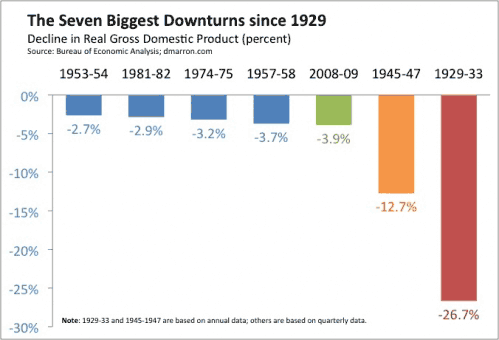





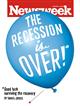

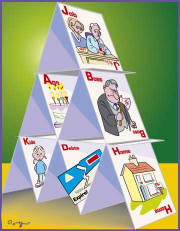

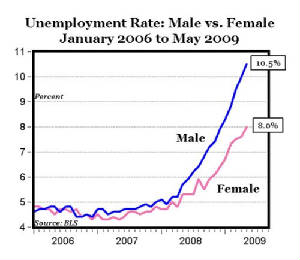


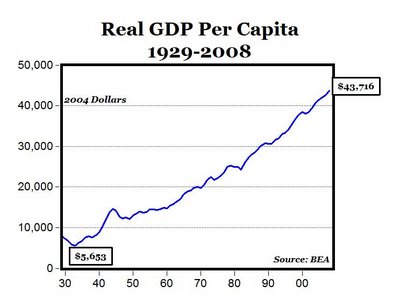







 The ailing OECD economies, which include the world’s major industrialized powers and a few developing countries, are
expected to see another 20 million workers join the ranks of the unemployed between January 2009 and the end of 2010. The
average unemployment rate is projected to approach 10%, up from 6.8% in 2008.
The ailing OECD economies, which include the world’s major industrialized powers and a few developing countries, are
expected to see another 20 million workers join the ranks of the unemployed between January 2009 and the end of 2010. The
average unemployment rate is projected to approach 10%, up from 6.8% in 2008.